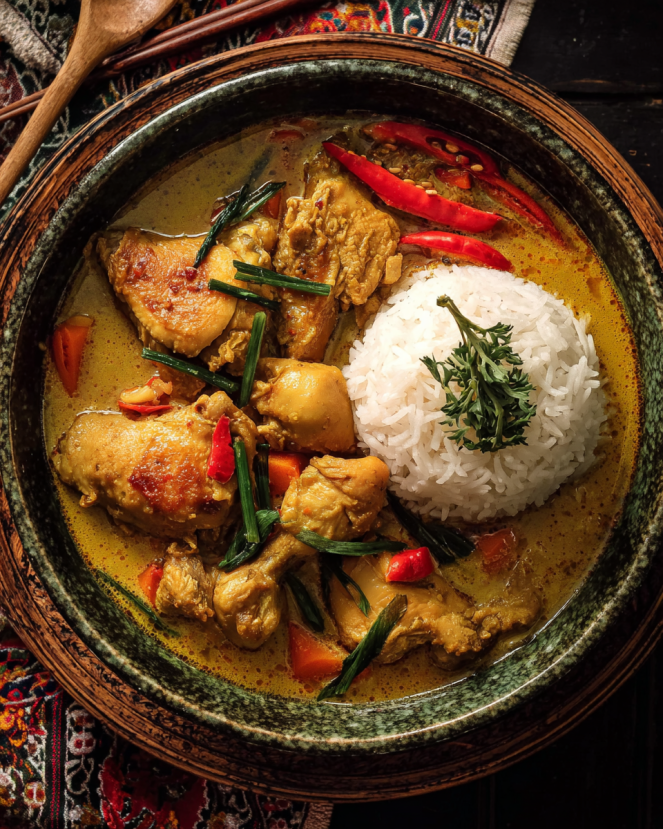
This Burmese Chicken Curry is a symphony of spices, with coconut milk creating a smooth and creamy sauce that pairs perfectly with the tender chicken and jasmine rice. The spices—turmeric, cumin, and chili powder—provide just the right amount of heat and warmth, making this dish truly comforting.
Whether you’re serving it for a weeknight dinner or a special occasion, this Burmese Chicken Curry brings an exotic touch to any meal. The combination of bright flavors from cilantro and lime juice balances the richness of the coconut milk, while a hint of fish sauce deepens the overall taste. This curry is sure to be a crowd-pleaser, bringing a little taste of Burma to your kitchen.
Full Recipe:
Ingredients:
-
2 ¼ pounds skinless, boneless chicken thighs, cut into chunks
-
2 teaspoons curry powder
-
1 teaspoon salt
-
½ teaspoon garam masala
-
2 onions, chopped
-
2 tablespoons water
-
1 tablespoon minced garlic
-
2 teaspoons paprika
-
1 teaspoon minced fresh ginger
-
½ teaspoon cayenne pepper
-
5 teaspoons corn oil
-
2 tomatoes, chopped
-
1 tablespoon fish sauce
-
1 teaspoon minced lemongrass
-
1 cup water
Directions:
-
Rub the chicken thighs with curry powder, salt, and garam masala. Cover and set aside to marinate.
-
In a blender, combine chopped onions, 2 tablespoons water, garlic, paprika, ginger, and cayenne pepper. Blend until smooth to create a fragrant spice paste.
-
Heat oil in a large skillet over medium heat. Add the blended onion-spice paste and sauté for about 7 minutes until it darkens.
-
Stir in the marinated chicken pieces and cook for 3–4 minutes.
-
Add chopped tomatoes, fish sauce, and lemongrass. Cook for an additional 2 minutes.
-
Pour in 1 cup of water and bring the mixture to a boil.
-
Reduce heat to low, cover the skillet, and simmer for 25–35 minutes until the chicken is tender and starting to fall apart. Stir occasionally.
-
Uncover the skillet, increase heat, and reduce the sauce for about 5 minutes until slightly thickened.
-
Skim off any excess oil from the top before serving.
Prep Time: 15 minutes | Cooking Time: 40 minutes | Total Time: 55 minutes
Kcal: 215 kcal | Servings: 8 servings
Cultural Origins & Background
Burmese Chicken Curry, known locally as “Kyethar Hin”, is a staple in Myanmar (Burma) and represents the beautiful culinary fusion of South Asian, Southeast Asian, and Chinese influences. Unlike Indian or Thai curries, Burmese curries are often lighter in consistency but incredibly deep in flavor. The use of aromatics like lemongrass, garlic, and ginger, paired with fish sauce and tomatoes, gives it a distinct tangy umami balance that sets it apart.
Burmese cuisine often uses onion-based curry pastes, which are fried slowly to build the curry’s base—this technique is crucial for delivering depth and sweetness without overpowering the dish. The inclusion of garam masala and curry powder hints at Indian inspiration, while fish sauce nods to Southeast Asia.
Flavor Profile & What Makes It Unique
-
Aromatic & Deeply Savory: The paste of onion, garlic, and ginger cooked until dark brings a base sweetness, balanced by savory fish sauce and the sharpness of lemongrass.
-
Mild Heat: It features a soft warmth from cayenne pepper and paprika, making it accessible even to those sensitive to spice, but it’s also easily adaptable for more heat.
-
Umami-Rich Sauce: The combination of fish sauce, tomatoes, and reduced chicken stock or water creates a savory glaze that coats the chicken beautifully.
-
Fall-Apart Chicken Thighs: Skinless, boneless chicken thighs absorb the spice blend well and become exceptionally tender as they cook down slowly.
Best Pairings & Serving Ideas
-
Serve With:
-
Steamed Jasmine or Basmati rice to soak up the flavorful sauce.
-
Indian breads such as naan, roti, or chapati for scooping up the curry.
-
-
Garnish Ideas:
-
Chopped fresh cilantro or Thai basil for a herby finish.
-
A squeeze of lime juice for acidity.
-
Thinly sliced red onions or chilies if you like it hotter.
-
-
Side Dish Suggestions:
-
A cucumber yogurt salad (like raita) for cooling contrast.
-
Pickled vegetables for tang.
-
Lightly sautéed greens like bok choy or spinach for freshness.
-
Substitutions & Variations
-
No Lemongrass? Use a bit of lemon zest and juice for brightness.
-
Spicier Version: Add chopped green chilies or a teaspoon of chili paste.
-
Vegetable Add-Ins: Potatoes, carrots, green beans, or eggplant work well and absorb the flavors beautifully.
-
Alternative Proteins: This recipe works with pork, firm tofu, or even white fish—adjust cooking time accordingly.
Cooking Tips
-
Blending the Paste: Take time to get a smooth blend—it’s essential for texture and even cooking.
-
Low and Slow: Simmering covered allows the flavors to fully develop and the chicken to tenderize.
-
Oil Skimming: A classic Burmese technique involves skimming off excess oil before serving for a cleaner finish.
Nutrition Highlights
-
High protein: 22g per serving
-
Low carb: ~5g per serving
-
Gluten-Free: Naturally gluten-free unless paired with wheat-based breads
-
Calories: Around 215 kcal per serving—light yet satisfying
Historical & Cultural Context
Burmese cuisine is often overshadowed by its more globally recognized neighbors—Thailand, India, and China. Yet, Myanmar holds a deeply flavorful and diverse food culture. Chicken curry (Kyethar Hin) is not just a dish—it’s part of celebrations, religious festivals, and everyday family meals.
In a traditional Burmese household, curry is usually made in large batches and enjoyed over several days. As the curry rests, the flavors deepen. The oil rising to the top (called ‘hsi pyan’, or “return oil”) is seen as a sign that the curry is perfectly cooked—fully infused, matured, and ready to serve.
Historically, families would gather around a low table, with curries like this one served alongside fermented tea leaf salads (lahpet thoke), tangy pickles, and warm rice. It’s a communal experience—hearty, humble, and made to share.
Chef’s Notes & Insider Tips
-
Don’t Rush the Paste: When frying the onion-garlic-ginger paste, resist the temptation to turn up the heat. Low, patient cooking caramelizes the onions and removes their sharpness, which is crucial for a balanced curry.
-
Marinate for Depth: Letting the chicken sit with the curry powder and garam masala even for 15–30 minutes before cooking can significantly enhance the flavor.
-
Control the Sauce: Burmese curries don’t always aim to be “saucy.” The sauce should cling to the chicken, not drown it. Adjust your simmer time to get that clingy consistency.
-
Meal Prep Friendly: This curry stores beautifully in the fridge for up to 4 days and tastes even better the next day. It also freezes well—ideal for batch cooking.
Health and Modern Appeal
In today’s world of wellness and clean eating, this recipe fits naturally into gluten-free and low-carb lifestyles. Using skinless chicken thighs ensures you get protein and flavor without excess fat. You can also adapt the oil levels or use avocado or coconut oil for a cleaner fat source.
Want to make it dairy-free? It already is. Keto-friendly? Skip the rice, serve with cauliflower rice or on its own. Paleo? Absolutely—it’s packed with real ingredients and no additives.
Variations Across Regions
While this version represents a classic home-cooked curry, regional adaptations within Myanmar—and even among the Burmese diaspora—include:
-
Burmese Coconut Chicken Curry (Ohn No Kyethar Hin): Adds coconut milk for a creamier, richer sauce.
-
Spicy Shan Chicken Curry: A northern take, often hotter, using local chilis and sometimes paired with noodles.
-
Street-Food Inspired Versions: Simplified and cooked over large woks with added vegetables, ideal for fast preparation in local markets.
Fun Facts
-
Why Fish Sauce? Burmese food relies on fermented ingredients for umami. Fish sauce is to Burmese cuisine what soy sauce is to Chinese food—it brings everything together.
-
Garam Masala in a Burmese Dish? A legacy of trade routes and colonial influence—India’s spice palette left a flavorful footprint in Burmese kitchens.
-
Burmese Curry vs. Thai or Indian: Thai curries are coconut-based and sweet-spicy, Indian curries are creamy and complex. Burmese curry is all about balance, freshness, and depth without heaviness.
Conclusion
Burmese Chicken Curry is more than just a dish—it’s a warm, fragrant embrace from a culinary tradition that deserves a spotlight on the global stage. With its delicate balance of spices, tender chicken, and the unmistakable brightness of lemongrass and tomatoes, this curry offers a taste of Myanmar’s rich cultural tapestry in every bite.
Whether you’re new to Southeast Asian cuisine or a seasoned curry enthusiast, this recipe is both approachable and deeply rewarding. It’s a wonderful reminder that sometimes the most memorable meals are those made with simple, honest ingredients—and a little patience. Serve it with rice or flatbread, share it with loved ones, and enjoy a comforting journey through flavor and heritage.