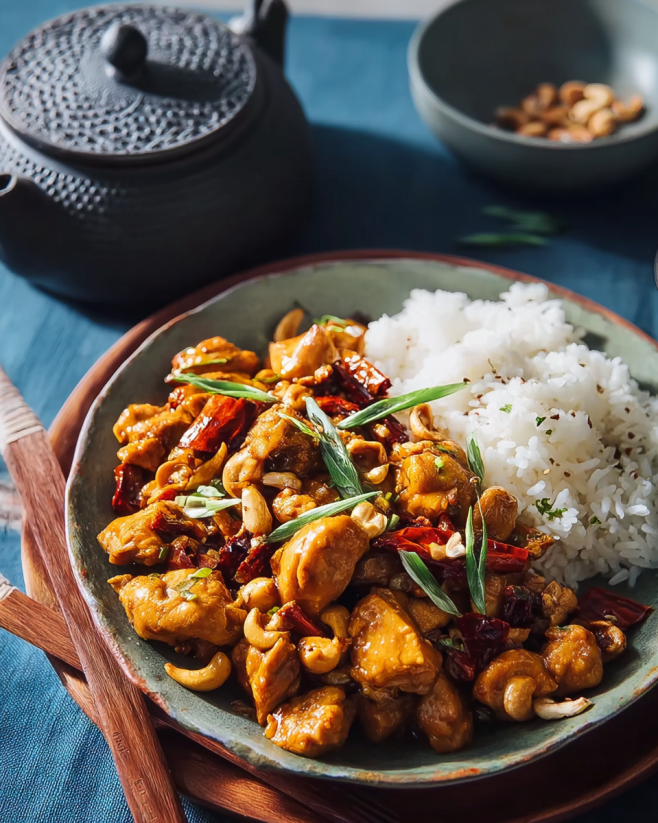
Kung Pao Chicken is a classic Chinese dish that brings together the perfect balance of sweet, salty, and spicy flavors. The tender chicken pieces are stir-fried with crispy peanuts and vibrant vegetables, creating an irresistible combination of textures. This dish is perfect for a weeknight meal or to impress guests with a delicious, restaurant-style dinner at home.
The beauty of Kung Pao Chicken lies in its versatility. You can adjust the level of spice to suit your taste by adding more or fewer dried chilies. Plus, the savory sauce that coats the chicken and vegetables gives the dish an added depth of flavor that will make your taste buds dance. Served over steamed rice, this dish is sure to satisfy your hunger and your cravings for bold, exciting flavors.
Full Recipe:
Ingredients:
-
1 lb boneless skinless chicken breasts, cut into bite-sized pieces
-
1/4 cup soy sauce
-
1/4 cup rice vinegar
-
2 tablespoons hoisin sauce
-
2 tablespoons sugar
-
2 teaspoons cornstarch
-
1 tablespoon vegetable oil
-
1/2 cup unsalted dry roasted peanuts
-
3 tablespoons sesame oil
-
3 dried red chilies
-
3 garlic cloves, minced
-
1 teaspoon fresh ginger, minced
-
1/2 cup sliced bell peppers
-
1/4 cup sliced green onions
-
Salt to taste
Directions:
-
In a small bowl, whisk together soy sauce, rice vinegar, hoisin sauce, sugar, and cornstarch. Set aside.
-
Heat the vegetable oil in a large skillet or wok over medium-high heat. Add chicken pieces and stir-fry for 5-7 minutes until golden brown. Remove chicken and set aside.
-
In the same skillet, add sesame oil, dried red chilies, garlic, and ginger. Stir-fry for about 1 minute until fragrant.
-
Add bell peppers and stir-fry for another 2-3 minutes until tender-crisp.
-
Return the chicken to the skillet, pour the sauce over the mixture, and stir to coat everything evenly. Add the peanuts and green onions, and stir-fry for an additional 2 minutes.
-
Season with salt to taste and serve hot over steamed rice.
Prep Time: 15 minutes | Cooking Time: 15 minutes | Total Time: 30 minutes
Kcal: 350 kcal | Servings: 4 servings
History & Origin
Kung Pao Chicken (宫保鸡丁, Gōng Bǎo Jī Dīng) is a classic dish from China’s Sichuan province, famous for its bold, spicy, and numbing flavors. The dish is named after Ding Baozhen, a Qing Dynasty official whose title was “Gong Bao” (Palace Guardian). Over time, this flavorful stir-fry became popular throughout China and eventually around the world, often adapted to suit local tastes.
While the authentic Sichuan version features Sichuan peppercorns (which create a numbing, tingling sensation), many Western adaptations focus more on chilies, soy-based sauce, and peanuts.
Flavor Profile
Kung Pao Chicken is known for its perfect balance of:
-
Spiciness – dried chilies provide the heat.
-
Savory notes – soy sauce, hoisin, and garlic form the umami backbone.
-
Sweetness – a touch of sugar helps round out the flavors.
-
Tanginess – vinegar or rice wine adds brightness.
-
Crunch – peanuts or cashews bring texture and nuttiness.
Cooking Tips
-
Marinate the chicken – A short marinade with soy sauce and cornstarch makes the chicken extra tender and gives it that silky restaurant-style texture.
-
High heat is key – Use a wok or a large skillet and stir-fry quickly. The searing locks in flavor and prevents the chicken from drying out.
-
Control the spice – Adjust the number of dried chilies (or remove seeds) depending on your heat tolerance. For a more authentic kick, add Sichuan peppercorns.
-
Peanuts or cashews? – While peanuts are traditional, cashews are a tasty alternative. Toasting them lightly before adding enhances the flavor.
-
Make extra sauce – Kung Pao Chicken pairs beautifully with rice; extra sauce means every bite is coated with flavor.
Serving Suggestions
-
With steamed white rice (the classic choice, as it soaks up the sauce).
-
Over fried rice or noodles for a heartier meal.
-
As part of a Chinese-style dinner spread with dishes like fried rice, egg rolls, or stir-fried vegetables.
-
With a lighter side like cucumber salad or stir-fried bok choy to balance the heat.
Variations
-
Vegetarian Kung Pao – Swap chicken for tofu, mushrooms, or even cauliflower.
-
Kung Pao Shrimp – A seafood version that’s equally bold and delicious.
-
Low-carb Kung Pao – Serve over cauliflower rice or zucchini noodles.
-
Mild family-friendly – Reduce chilies, add bell peppers or carrots for extra sweetness.
-
Authentic Sichuan-style – Include Sichuan peppercorns for that signature numbing spiciness.
Why This Recipe Works
-
Quick prep and fast cooking – ready in under 40 minutes.
-
Balanced sauce that’s not too spicy but still flavorful.
-
Easy to adapt based on pantry staples.
-
Gives you restaurant-quality results at home.
Cultural Significance
Kung Pao Chicken isn’t just another stir-fry—it’s a symbol of Sichuan’s culinary mastery. In Sichuan cuisine, the balance of mala (麻辣), which translates to numbing and spicy, is central. The dish highlights this harmony by combining dried chilies for heat and (in the authentic version) Sichuan peppercorns for the signature numbing sensation.
In Western adaptations, the “numbing” element is often skipped, but the soul of the dish—crispy chicken, peanuts, and glossy sauce—remains. Because of this, Kung Pao Chicken has become one of the most internationally recognized Chinese dishes, often featured on takeout menus worldwide.
Ingredient Spotlight
-
Chicken: Boneless, skinless chicken breast is common, but thighs give juicier results.
-
Dried Red Chilies: Traditional versions use small Chinese chilies (like Tien Tsin). You can substitute with cayenne or arbol chilies if unavailable.
-
Sichuan Peppercorns (optional): Add them for authenticity—they provide that citrusy, numbing sensation.
-
Soy Sauce & Hoisin Sauce: Build the umami-rich sauce base. Hoisin also adds a hint of sweetness.
-
Rice Vinegar: Balances the richness with acidity.
-
Peanuts: Dry-roasted or lightly toasted; unsalted works best to control flavor.
-
Garlic & Ginger: Essential aromatics for depth.
-
Green Onions: Add freshness and mild onion flavor.
Common Mistakes to Avoid
-
Overcrowding the Pan: This causes steaming instead of stir-frying. Cook chicken in batches if needed.
-
Skipping the Marinade: Even 15 minutes of marinating makes a big difference in texture.
-
Burning the Chilies: Stir-fry them briefly until fragrant; if they turn black, they’ll make the dish bitter.
-
Adding Nuts Too Early: Always add peanuts or cashews at the end to maintain their crunch.
-
Overcooking Chicken: Since pieces are small, they cook quickly—watch closely to avoid dryness.
Pairing Ideas
-
Main Dish Combo: Pair Kung Pao Chicken with Hot and Sour Soup or Egg Drop Soup for a restaurant-style meal.
-
Vegetable Sides: Garlic green beans, stir-fried broccoli, or bok choy balance the richness.
-
Drinks: Green tea for a light, refreshing pairing, or a crisp lager to cut through the spice.
Make-Ahead & Storage
-
Prep Ahead: Chop chicken, mix sauce, and cut vegetables in advance. Store separately until ready to cook.
-
Fridge: Leftovers keep 3–4 days in an airtight container.
-
Freezer: Freeze cooked Kung Pao Chicken (without peanuts) for up to 2 months. Add fresh peanuts when reheating for crunch.
-
Reheat: Warm in a skillet over medium heat; avoid microwaving too long, as chicken can dry out.
How to Adjust Spice Level
-
Mild Version: Use fewer dried chilies, or remove their seeds.
-
Medium Heat: Use around 6–8 dried chilies, seeds in.
-
Extra Spicy: Add Sichuan peppercorns and more chilies, or mix in chili oil for a fiery sauce.
Conclusion
Kung Pao Chicken is more than just a takeout favorite—it’s a dish with deep cultural roots and a flavor profile that perfectly balances heat, sweetness, tang, and crunch. With simple ingredients and a quick stir-fry technique, you can recreate this authentic classic right in your own kitchen.
Whether you stick to the traditional Sichuan style with fiery chilies and peppercorns or prefer a milder, family-friendly version, this recipe is versatile and always satisfying. Serve it with steamed rice or noodles, and you’ll have a restaurant-quality meal in under 40 minutes.
Next time you crave bold and comforting flavors, skip the delivery and make Kung Pao Chicken at home—it’s easier, healthier, and absolutely delicious.