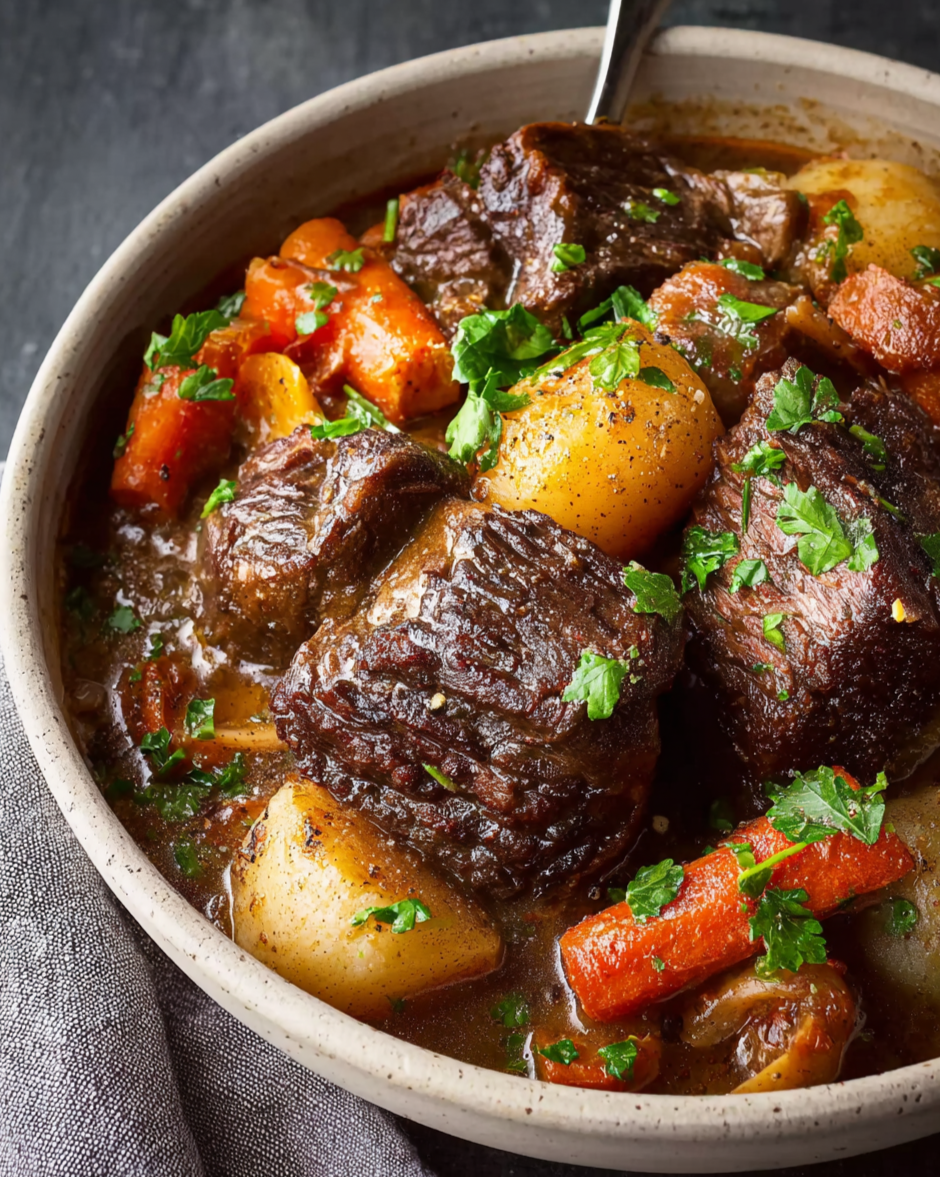
If you’re craving something hearty yet elegant, this braised beef delivers both comfort and sophistication in every bite. Tender beef pieces are served over a smooth bed of mashed potatoes or buttered noodles, then draped in a rich, glossy sauce that’s full of deep, savory flavor. A sprinkle of fresh herbs adds color and a burst of aroma, while roasted vegetables on the side bring balance to the plate. Perfect for cozy family dinners or special occasions, this beautifully plated dish turns a simple meal into a restaurant-worthy experience that’s as stunning to look at as it is satisfying to eat.
FULL RECIPE:
Ingredients
-
2 pounds beef chuck roast, cut into large chunks
-
2 tablespoons olive oil
-
1 large onion, chopped
-
3 cloves garlic, minced
-
2 medium carrots, peeled and sliced
-
2 celery stalks, chopped
-
2 tablespoons tomato paste
-
1 ½ cups beef broth
-
1 cup red wine (optional; substitute with extra broth if preferred)
-
2 tablespoons soy sauce
-
2 teaspoons Worcestershire sauce
-
1 teaspoon dried thyme
-
1 teaspoon dried rosemary
-
2 bay leaves
-
Salt and black pepper, to taste
-
1 tablespoon cornstarch mixed with 2 tablespoons water (for thickening, optional)
-
Fresh parsley, chopped (for garnish)
Directions
-
Prepare the beef: Pat beef chunks dry with paper towels and season generously with salt and pepper.
-
Brown the meat: Heat olive oil in a large pot or Dutch oven over medium-high heat. Sear beef on all sides until browned. Remove and set aside.
-
Sauté the vegetables: In the same pot, add onions, garlic, carrots, and celery. Cook until softened, about 5 minutes.
-
Add tomato paste: Stir in tomato paste and cook for 1–2 minutes to deepen the flavor.
-
Deglaze the pot: Pour in red wine (or extra broth) and scrape up any browned bits from the bottom.
-
Add remaining ingredients: Return the beef to the pot. Add beef broth, soy sauce, Worcestershire sauce, thyme, rosemary, and bay leaves. Bring to a simmer.
-
Slow cook: Cover and simmer on low heat for 2½ to 3 hours, or until beef is tender and easily pulls apart with a fork. Alternatively, cook in a preheated oven at 325°F (165°C) for the same duration.
-
Thicken the sauce (optional): Remove beef and bay leaves. Stir in the cornstarch slurry and cook until the sauce thickens, about 3 minutes.
-
Serve: Return beef to the pot, coat with sauce, and garnish with chopped parsley before serving.
Prep Time: 10 minutes | Cooking Time: 35 minutes | Total Time: 45 minutes
Kcal: 480 kcal | Servings: 6 servings
Nutritional Information (Estimated per serving)
-
Calories: 390
-
Protein: 32g
-
Fat: 22g
-
Saturated Fat: 7g
-
Carbohydrates: 10g
-
Fiber: 2g
-
Sugar: 4g
-
Sodium: 710mg
-
Cholesterol: 95mg
Category
Dinner
Culinary Background
Braising as a cooking method dates back centuries and is rooted in both European and Asian cuisines. In France, dishes like boeuf bourguignon and pot-au-feu exemplify the braising technique, showcasing how wine, herbs, and aromatics can elevate simple ingredients into gourmet meals. In Asian cooking, similar techniques are found in dishes such as Chinese red-braised beef or Filipino pares, where soy sauce, star anise, and sugar create a sweet-savory glaze.
The beauty of braising lies in its adaptability. Cooks across the world adjust the base ingredients according to local flavors and available ingredients—sometimes using red wine, other times soy sauce, vinegar, or coconut milk. What remains consistent is the method: sear the meat, add liquid, cover tightly, and let time and gentle heat do the rest.
Texture and Flavor Profile
A perfectly braised beef dish should have a silky, rich sauce and meat that practically falls apart when touched with a fork. The depth of flavor comes from several layers of cooking. Browning the beef first develops the Maillard reaction, giving the dish its signature deep, roasted flavor. The vegetables—typically onions, garlic, carrots, and celery—add sweetness and body to the sauce. Tomato paste introduces umami and a slight tang that balances the richness of the meat.
As the beef cooks, its juices meld with the braising liquid, creating a sauce that is savory, aromatic, and slightly thickened. The seasonings—herbs like rosemary, thyme, and bay leaves—add earthy undertones that make the dish aromatic without overpowering the beef’s natural flavor. Optional additions such as red wine or Worcestershire sauce enrich the broth with complexity and depth.
Cooking Method and Science
The success of braised beef hinges on temperature control and patience. Braising should always occur at a low simmer—never a rapid boil. High heat can cause the meat fibers to tighten, resulting in tough, dry beef. A slow simmer, on the other hand, gently breaks down the collagen in connective tissues into gelatin, which thickens the sauce and provides a luxurious mouthfeel.
Typically, braising takes between 2½ to 3 hours, depending on the cut and size of the beef. Tougher cuts like chuck roast or brisket are ideal because they contain the right balance of fat, collagen, and muscle. These cuts are economical, flavorful, and well-suited to slow cooking. The process not only tenderizes the meat but also extracts maximum flavor, ensuring that every bite is infused with richness.
Serving Suggestions
Braised beef is an incredibly versatile dish that pairs beautifully with a wide range of sides. The most traditional accompaniment is creamy mashed potatoes, which soak up the flavorful sauce perfectly. For a more rustic touch, it can be served with buttered noodles, steamed rice, or even crusty bread to mop up the gravy.
Vegetable sides such as roasted carrots, green beans, or sautéed spinach balance the richness of the meat. For a complete meal, serve it with a simple salad dressed in a light vinaigrette to cleanse the palate. Braised beef also pairs wonderfully with red wine or dark beer, both of which enhance the deep, savory notes of the dish.
Variations and Regional Twists
One of the reasons braised beef remains popular worldwide is its adaptability. While the classic version uses beef broth and red wine, regional versions showcase unique ingredients and flavor profiles:
-
Asian Style Braised Beef: Uses soy sauce, star anise, ginger, and rice wine for a sweet and aromatic twist.
-
Mediterranean Braised Beef: Incorporates tomatoes, olives, and oregano, creating a tangy and herbaceous flavor.
-
Latin American Braised Beef (Ropa Vieja): Uses bell peppers, onions, and a tomato-based sauce with cumin and paprika for warmth.
-
Beer-Braised Beef: Substitutes wine with dark beer for a malty, earthy depth that enhances the caramelized flavors of the beef.
Each variation carries its own cultural identity, making braised beef a dish that tells a story no matter where it’s prepared.
Tips for Perfect Braised Beef
-
Choose the right cut: Opt for chuck roast, short ribs, or brisket. These cuts become tender and flavorful when cooked slowly.
-
Brown properly: Do not rush the searing process. Browning each side thoroughly adds a rich flavor base to the dish.
-
Deglaze completely: After browning, always scrape the bottom of the pot to release the flavorful browned bits (fond).
-
Control the liquid: The liquid should cover about two-thirds of the beef, not the entire surface, to allow gentle braising rather than boiling.
-
Low and slow: Maintain a gentle simmer to avoid overcooking or drying out the meat.
-
Rest before serving: Let the dish sit for a few minutes after cooking to allow flavors to meld and the sauce to thicken naturally.
Storage and Reheating
Braised beef is a dish that often tastes even better the next day. The flavors continue to develop as the sauce sits and the meat absorbs more of the liquid. To store, let the dish cool completely before transferring it to an airtight container. It can be refrigerated for up to four days or frozen for up to three months.
When reheating, use a low flame or warm it in the oven at 325°F (165°C) to preserve the tenderness of the beef. Avoid microwaving for too long, as uneven heating can dry out the meat.
Health and Nutrition Insights
While braised beef is indulgent and rich, it can also be part of a balanced diet when enjoyed in moderation. Beef is an excellent source of high-quality protein, essential amino acids, iron, zinc, and vitamin B12. These nutrients are vital for muscle growth, energy production, and immune function.
To make the dish healthier, you can trim excess fat from the beef before cooking or skim the fat from the top of the sauce after braising. Using low-sodium broth and controlling added salt also helps manage sodium intake. For a lighter version, increase the ratio of vegetables to meat and serve it with steamed or roasted vegetables instead of starchy sides.
Cultural Significance and Appeal
Braised beef holds cultural significance as a symbol of hospitality and comfort. In many households, it’s considered a celebratory dish served during holidays, Sunday dinners, or special gatherings. The long cooking time often brings families together, as the aroma fills the home and builds anticipation.
Its universal appeal lies in the balance of texture, aroma, and heartiness. From European kitchens to Asian households, braised beef continues to be a dish that bridges generations and cultures—reminding us that the best meals are often those made with patience, love, and time.
Conclusion
Braised beef is more than just a recipe—it’s a culinary tradition that celebrates the art of slow cooking. The combination of simple ingredients, time-honored technique, and deep, rich flavors makes it a dish worthy of any table. Whether prepared for a casual family meal or a festive occasion, its comforting aroma and tender texture never fail to impress.
Beyond its taste, braised beef embodies the beauty of transformation: turning tough cuts into tender masterpieces through the slow magic of heat and time. It’s a meal that nourishes not just the body but also the soul—a reminder that patience in cooking often leads to the most rewarding results.