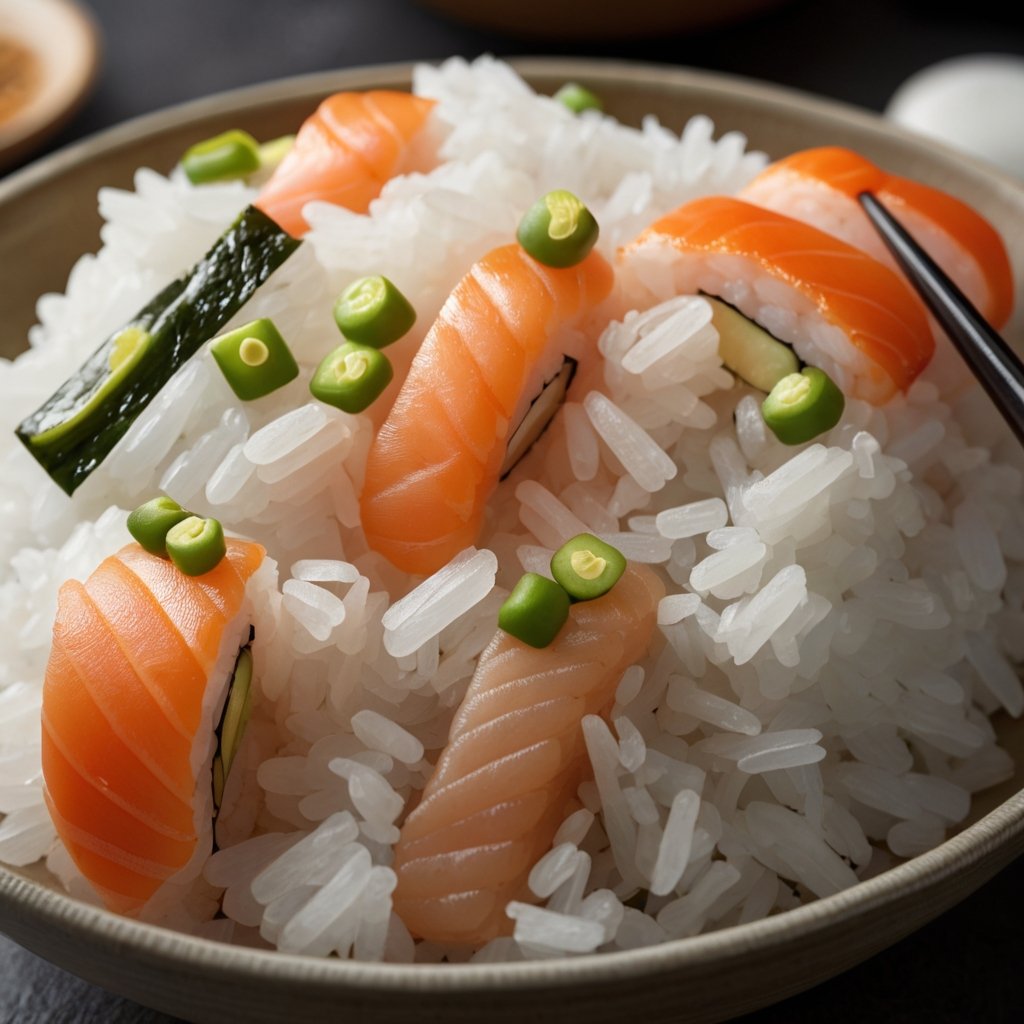
Sushi rice, also known as shari or sumeshi, is more about the preparation method than the type of rice itself. The base for sushi rice is typically short-grain white rice, which has a high starch content. This gives sushi rice its signature sticky texture, making it perfect for rolling sushi or forming nigiri. Sushi rice is seasoned with a mixture of rice vinegar, sugar, and salt to give it a mild sweet-and-sour flavor.
Though sushi rice is commonly associated with Japanese cuisine, it is also used in various other Asian dishes, and its preparation is considered an art form. The key to making perfect sushi rice lies in getting the right texture and seasoning, which this recipe achieves with a straightforward yet effective approach.
What Makes This Recipe “Perfect”?
This sushi rice recipe has been praised by home cooks for its simplicity and delicious results. The recipe uses just a few basic ingredients—short-grain rice, rice vinegar, sugar, salt, and vegetable oil. It is particularly appreciated for its versatility and ease of use, as it can be made on the stovetop, in a rice cooker, or even in an Instant Pot.
The beauty of this recipe lies in its balanced seasoning. The rice vinegar adds acidity, the sugar imparts a subtle sweetness, and the salt enhances all the flavors, creating a harmonious blend that elevates the rice to the perfect level for sushi making
full recipe:
Ingredients
- Short-grain sushi rice: 1 ½ cups
- Water: 3 cups
- Rice vinegar: 1/3 cup
- Sugar: 3 tablespoons
- Salt: 1 tablespoon
- Vegetable oil: 1 teaspoon (optional for added flavor)
Directions:
1. Rinse the Rice
Start by rinsing 1 ½ cups of short-grain sushi rice under cold water until the water runs clear. This step is crucial to remove excess starch, which can make the rice too sticky and clumpy. Rinsing helps the rice grains stay separate and maintain a nice texture once cooked.
2. Cook the Rice
In a saucepan, combine the rinsed rice and 3 cups of water. Bring the mixture to a boil over medium heat. Once boiling, reduce the heat to low, cover the pot, and let it simmer for 15 minutes. The rice should absorb all the water, and the grains will become tender.
Alternatively, if you’re using a rice cooker, simply follow the manufacturer’s instructions for cooking sushi rice.
3. Prepare the Vinegar Mixture
While the rice is cooking, mix the rice vinegar, sugar, and salt in a separate small saucepan. Place it over medium heat, stirring occasionally, until the sugar and salt dissolve completely. Once dissolved, remove the mixture from the heat and set it aside to cool.
4. Combine the Rice and Vinegar Mixture
Once the rice has finished cooking, transfer it to a large mixing bowl or a flat container to allow it to cool. While the rice is still warm (but not hot), pour the cooled vinegar mixture over the rice. Use a spatula or a rice paddle to gently fold the vinegar mixture into the rice. Be sure to stir carefully to avoid mashing the rice, as it should remain intact but sticky.
5. Cool the Rice
Allow the rice to cool to room temperature. It’s essential to let the rice cool fully before using it for making sushi. Some people use a fan to speed up the cooling process, which gives the rice a shiny finish.
6. Serving the Rice
Once cooled, your sushi rice is ready for use in any sushi dish, whether you’re making sushi rolls, nigiri, or even a sushi bowl. It’s important to use the rice within a few hours for the best texture, as it tends to lose its stickiness if left out for too long.
Suggested Serving Ideas
- Sushi Rolls (Maki Sushi): Place a sheet of nori (seaweed) on a bamboo sushi mat, spread a thin layer of the sushi rice over the nori, and add your preferred fillings such as tuna, salmon, cucumber, or avocado. Roll it tightly and slice into bite-sized pieces.
- Nigiri: Mold a small amount of rice into an oval shape and top it with a slice of fresh fish like salmon or tuna. This minimalist presentation highlights the quality of the rice.
- Sushi Bowls: If you’re looking for a quick and easy meal, you can serve the sushi rice in a bowl with your choice of toppings like cooked shrimp, pickled ginger, seaweed, and sliced vegetables.
- Side Dish: Sushi rice can also be served as a side dish alongside other Japanese meals such as teriyaki chicken or miso soup.
Benefits of Sushi Rice
Sushi rice offers several health benefits, mainly due to its base of short-grain rice, which is often less processed than other types of white rice. Here are some of the benefits:
- High in Starch: Short-grain sushi rice has a high starch content, which makes it easier to digest. The sticky texture helps to hold the rice together, making it perfect for eating with chopsticks.
- Source of Energy: Rice is an excellent source of carbohydrates, which provide a steady energy supply throughout the day.
- Low in Fat: When prepared without excessive oil or fatty ingredients, sushi rice is a low-fat food that can complement a balanced diet.
- Gluten-Free: Sushi rice is naturally gluten-free, making it suitable for those with gluten sensitivities or celiac disease.
Tips and Variations
- Oil Variation: Some cooks prefer adding toasted sesame oil to the vinegar mixture for an added layer of flavor. This adds a subtle nutty taste to the rice, which pairs wonderfully with sushi rolls.
- Less Sweet Version: If you prefer a less sweet flavor in your rice, you can reduce the amount of sugar or even omit it entirely.
- Rice Cooker or Instant Pot: If you’re short on time, you can use a rice cooker or Instant Pot to prepare the rice. These appliances simplify the process and give consistent results every time.
- Use Fresh Ingredients: For the best results, use fresh, high-quality fish and vegetables when preparing sushi rolls. The sushi rice will be the base, but the fillings are equally important for flavor.