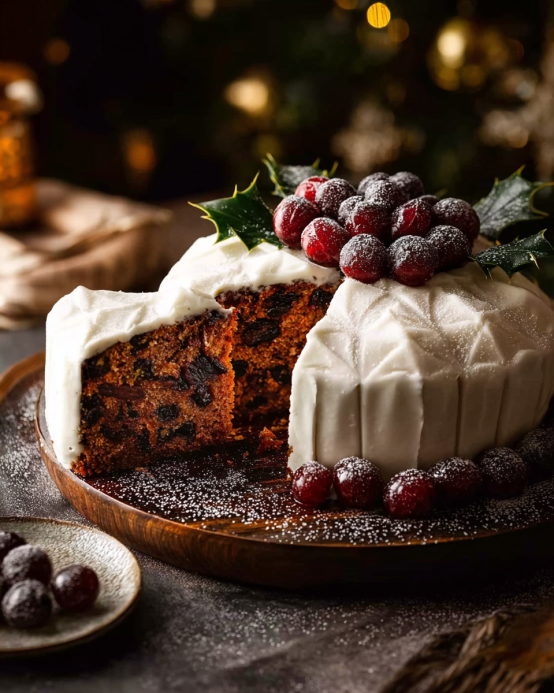
There’s nothing quite like slicing into a deeply fragrant fruit cake as the festive season rolls around: the warm notes of allspice, nutmeg and cinnamon dancing with the sweet chew of raisins, dates, apricots and cherries. This moist Christmas fruit-cake — rich, dense, yet soft — captures that nostalgic charm. What I love about this version is how you don’t have to soak the fruit overnight; a quick microwave soak followed by an hour’s resting plumps the fruit beautifully so the cake bakes up moist and full-flavoured in a single day.
For the finishing touch, a layer of marzipan and smooth white fondant transforms this rustic, old-world cake into a festive centrepiece — perfect for holiday dinners, potlucks or as a thoughtful homemade gift. Whether sliced thin with custard or displayed whole under a ribbon, this cake brings warmth, tradition, and a touch of indulgence to any celebration.
FULL RECIPE:
Ingredients:
- 300 g raisins
- 150 g diced dried apricots, chopped about 8 mm
- 75 g mixed peel, diced 5 mm
- 150 g glace cherries, chopped about 8 mm
- 180 g dates, diced 5 mm
- 1 cup + 2 tbsp apple juice (or 1/3 cup brandy + 2/3 cup juice)
- 120 g unsalted butter, softened
- 1½ cups packed dark brown sugar
- ½ cup vegetable oil (or canola / peanut / grapeseed oil)
- 3 tbsp molasses or golden syrup
- ½ tsp salt
- ½ tsp allspice
- ½ tsp cinnamon
- ½ tsp nutmeg
- 3 large eggs
- ½ tsp baking powder
- 1 2/3 cups plain (all-purpose) flour
- ¾ cup chopped walnuts (optional)
Optional decoration:
- 250 g ready-to-roll marzipan
- 250 g ready-to-roll white fondant
- Extra glace cherries (for topping) or dusting of icing sugar
Directions:
- Combine all the dried fruit with the apple juice (or brandy + juice) in a large microwave-safe bowl. Microwave on high for about 1½ minutes until hot. Stir to coat evenly, cover and let sit for 1 hour so the fruit plumps up and absorbs the liquid.
- Preheat the oven to 160 °C (320 °F). Grease and line a 21–22 cm (8–9″) round cake pan with baking paper (about 7 cm / 2.75″ tall).
- Using an electric mixer, beat the softened butter and dark brown sugar until smooth and creamy (about 1 minute at medium-high speed).
- Add the vegetable oil and molasses (or golden syrup), then beat until combined. Add salt, allspice, cinnamon, nutmeg, and baking powder — mix until incorporated.
- Add the eggs, one at a time, beating until just combined after each addition.
- Fold in the flour gently. When the batter is mostly combined, fold in the soaked fruit mixture (including all juice) and the chopped walnuts, if using.
- Pour the batter into the prepared cake pan. Cover the top with foil. Bake for 2 hours 30 minutes. Then remove the foil and bake for an additional 30–45 minutes (or until a skewer inserted into the centre comes out clean). Start checking at 30 minutes.
- Remove from the oven, let cool in the pan for about 20 minutes, then transfer the cake to a wire rack to cool completely.
Prep Time: 30 minutes | Cook Time: 3 hours (plus soaking) | Total Time: about 4 hours 45 minutes
Kcal: ~388 kcal per serving slice* | Servings: 20–25 (when sliced thin)
History and Cultural Significance of Christmas Fruit Cake
The Christmas fruit cake is one of the oldest surviving holiday desserts, with origins tracing back to ancient Rome. Early versions were dense loaves made from pomegranate seeds, pine nuts, raisins, and barley mash. As trade routes expanded throughout Europe, spices and dried fruits became more accessible, transforming the once-simple cake into a luxurious staple associated with celebrations. By the Middle Ages, fruit cakes evolved into more elaborate creations enriched with honey, preserved fruits, and warming spices, symbolizing wealth and festivity.
Why This Style of Fruit Cake Stands Out
What distinguishes this particular Christmas fruit cake from traditional versions is its enhanced moisture and balanced richness. Many fruit cakes are known for being dense and sometimes dry, but this variation applies modern techniques to ensure tenderness. The combination of plumped dried fruits, molasses-like sweetness, and balanced use of fat creates a moist texture that appeals even to those who typically avoid fruit cake.
Importance of Proper Fruit Preparation
One of the most crucial elements affecting the outcome of a fruit cake is how the fruit mixture is prepared. Soaking the fruits ensures they rehydrate fully, which prevents them from drawing moisture out of the batter during baking. Traditional methods require soaking fruit for several days to several weeks in spirits such as brandy or rum. However, modern adaptations allow for accelerated hydration using heat, making the recipe more accessible for bakers who don’t want to wait long periods before baking.
Cake Texture, Structure, and Baking Science
A successful fruit cake is defined by its dense yet tender crumb. Its structure relies on minimal aeration compared to sponge cakes. Overmixing or beating at high speeds introduces excess air, disrupting the dense texture and causing tunneling or sinking during baking. Additionally, because the mixture contains a high amount of fruit, a lower baking temperature is essential to avoid burning the sugars while ensuring the center cooks through.
Decorating with Marzipan and Fondant
Marzipan and fondant are often used to elevate fruit cakes from rustic to refined. Marzipan not only contributes a sweet, almond-flavored layer but also acts as a moisture barrier between the cake and fondant. Its smooth texture creates an ideal surface for applying rolled fondant, ensuring a flawless, professional-looking finish.
Aging and Storage: Developing Flavor Over Time
One of the unique qualities of fruit cake is its ability to improve with age. Unlike most cakes that stale quickly, fruit cakes contain enough natural preservatives—sugar, dried fruit, and in some cases, alcohol—to remain delectable for long periods. During storage, flavors deepen as fruits meld with spices, and moisture redistributes throughout the cake.
Serving Suggestions and Pairings
Fruit cake is traditionally enjoyed thinly sliced due to its rich, dense nature. It can be served at room temperature or slightly chilled, which helps maintain clean, even slices. Pairings vary across cultures, but some of the most complementary accompaniments include warm custard, vanilla ice cream, whipped cream, or a sharp aged cheese such as cheddar—an unusual but beloved tradition in some regions.
Practical Tips for Perfecting Your Fruit Cake
Achieving a consistent, well-balanced fruit cake requires attention to detail. Ensuring even distribution of fruit prevents sinking during baking. Lining the baking pan with high sides of parchment helps regulate heat and protects the cake’s edges. Using a kitchen scale for precise measurements results in better consistency, as fruit cakes rely heavily on ingredient ratios.
Variations and Flavor Twists
Christmas fruit cakes invite creativity. Many bakers personalize them with regional or family-specific twists—adding tropical fruits, substituting nuts, or incorporating citrus zest for brightness. For those who enjoy classic boozy versions, replacing some or all of the soaking liquid with rum, brandy, or sherry creates warm, fragrant undertones. Meanwhile, non-alcoholic versions may incorporate spiced tea, orange juice, or apple cider.
Conclusion
The modern Christmas fruit cake remains a timeless holiday classic because it offers the perfect blend of tradition, flavor, and craftsmanship. Beyond its iconic dense structure and jewel-like fruits, it represents a culinary history passed down through generations. With its long shelf life, rich aromas, and impressive visual appeal—especially when adorned with marzipan and fondant—it continues to hold a special place on festive tables worldwide. Whether prepared as a personal indulgence, shared at gatherings, or given as a heartfelt homemade gift, this style of fruit cake brings warmth, nostalgia, and celebration to every slice.