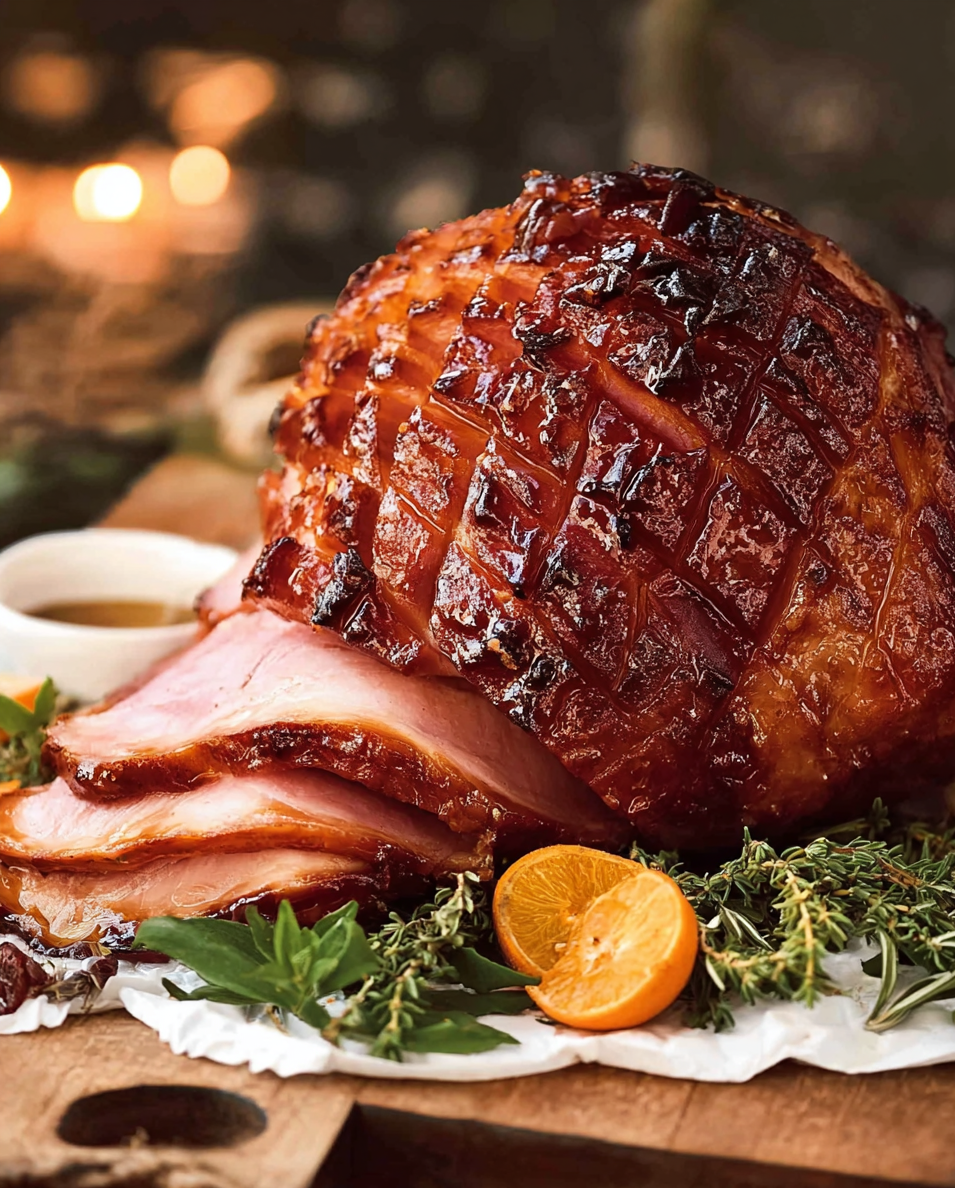
This Maple Glazed Holiday Ham is a true festive centerpiece, showcasing a beautifully caramelized crust created by the rich sweetness of real maple syrup. Each slice is tender and succulent, with notes of warm spices that bring comforting seasonal flavors to any holiday celebration. The glossy glaze gives it that irresistible, picture-perfect finish.
Perfect for Christmas, New Year’s, or any special gathering, this dish sits proudly at the heart of the table and fills the room with a warm, inviting aroma. Whether you pair it with roasted vegetables, mashed potatoes, or classic holiday sides, this ham guarantees a memorable feast that your guests will rave about long after the plates are cleared.
FULL RECIPE:
Ingredients:
- 1 whole bone-in ham (about 8–10 lbs)
- 1 cup pure maple syrup
- 1/2 cup brown sugar
- 2 tbsp Dijon mustard
- 2 tbsp apple cider vinegar
- 1/2 tsp ground cloves
- 1/2 tsp cinnamon
- 1/4 tsp black pepper
- Whole cloves (optional, for studding)
Directions:
- Preheat the oven to 325°F (165°C).
- Place the ham in a large roasting pan and score the surface in a crisscross pattern. Optional: stud the ham with whole cloves.
- In a saucepan, combine maple syrup, brown sugar, Dijon mustard, apple cider vinegar, ground cloves, cinnamon, and pepper. Simmer for 3–4 minutes until slightly thickened.
- Brush a generous layer of glaze over the ham.
- Cover ham loosely with foil and bake for 1 hour.
- Remove foil, brush with more glaze, and continue baking for an additional 45–60 minutes, basting every 15 minutes, until glossy and caramelized.
- Transfer ham to a cutting board, rest for 10 minutes, and slice to serve.
Prep Time: 10 minutes | Cooking Time: 1 hour 45 minutes | Total Time: 1 hour 55 minutes
Kcal: 320 kcal | Servings: 12 servings
The History and Appeal of Maple-Glazed Ham
Maple-glazed ham is a dish deeply rooted in classic holiday traditions, yet it continues to evolve as modern cooks look for the perfect balance between sweet and savory. Historically, glazed hams have been associated with winter celebrations because they were one of the few meats that cured well enough to last through the colder months. Before refrigeration, salting, smoking, and curing were the best ways to preserve pork. As a result, ham became a symbolic centerpiece of winter feasts, especially in Europe and North America.
The addition of maple syrup as a glaze component is uniquely linked to North American culinary heritage, particularly regions where maple trees thrive. Indigenous peoples were the first to discover how to harvest and reduce maple sap, and as settlers adopted this tradition, maple syrup became an important sweetener long before refined sugar was widely available. Pairing maple syrup with ham was a natural progression—its deep caramel notes complemented the salty, savory nature of cured pork.
Why Maple Works So Well with Ham
What makes maple syrup such a powerful ingredient in glazing? The answer lies in its natural sugars and unique flavor profile. Unlike honey or granulated sugar, maple syrup contains minerals and organic compounds that contribute to its distinctive taste. During roasting, these natural sugars caramelize slowly, forming a slightly sticky coating that clings beautifully to the scored surface of the ham.
The subtle smokiness of maple syrup pairs exceptionally well with the saltiness of cured pork. This contrast—sweet vs. salty, soft vs. crisp—creates a sensory experience that appeals to a wide audience, even those who may not consider themselves fans of sweeter meat preparations. In addition, maple syrup blends effortlessly with spices like cloves, cinnamon, and mustard, creating a glaze that is layered, aromatic, and refined.
Another reason maple works so well is its ability to hold up under high heat. Many glazes burn quickly, but the viscosity and natural composition of maple syrup allow it to reduce into a thick, candy-like shell without turning overly bitter. This results in a glossy, even coating that enhances both flavor and presentation.
Choosing the Right Ham for a Perfect Glaze
Selecting the right ham is essential for achieving the best results with a maple glaze. Bone-in hams are the most popular choice because they deliver superior flavor and moisture compared to boneless versions. The bone helps retain heat, distributing it evenly during roasting, which prevents the meat from drying out.
Understanding the Caramelization Process
Caramelization is at the heart of what makes maple-glazed ham so visually stunning and delicious. When the glaze is exposed to heat, the sugars begin to break down and re-form into complex compounds that deepen both flavor and color. This is why the final result has a dark amber hue, an appealing shine, and a slightly crisp finish.
Serving Suggestions and Pairing Ideas
Maple-glazed ham is incredibly versatile when it comes to serving options, making it ideal for both holiday dinners and casual gatherings. While it naturally pairs well with classic sides such as mashed potatoes, roasted vegetables, and green beans, its sweetness also complements tangy, acidic dishes. Consider pairing it with cranberry relish, citrus salads, or pickled vegetables to create contrast on the plate.
For more indulgent accompaniments, scalloped potatoes or sweet potato casseroles add richness, creating a satisfying, comforting spread. On the lighter side, fresh green salads tossed in vinaigrette offer balance and keep the meal from feeling overly heavy.
Texture and Flavor Dynamics of the Finished Dish
One of the greatest strengths of maple-glazed ham is its layered flavor profile. The glaze offers a sweet, aromatic crust while the interior remains juicy, tender, and savory. This dynamic contrast ensures that every bite is multifaceted rather than one-note.
Why This Dish Continues to Stand the Test of Time
In an age where culinary trends shift rapidly, maple-glazed ham remains a timeless classic. Its longevity can be attributed to its simplicity, elegance, and universal appeal. The ingredients used in the glaze—maple syrup, spices, mustard—are familiar yet elevated when combined. The cooking technique is straightforward but produces visually impressive results, making it perfect for both novice and experienced cooks.
Tips for Achieving the Best Results
To maximize the dish’s flavor potential, regular basting is essential. Each application of glaze adds a fresh, glossy layer that enhances caramelization. Allowing the ham to rest before cutting is another important step, as it helps redistribute juices and prevents moisture loss.
Conclusion
Maple-glazed ham remains one of the most cherished centerpiece dishes, celebrated for its irresistible combination of sweet maple richness and savory roasted ham. Its visual appeal alone can transform a dining table into a festive display, while its flavor profile makes it unforgettable. The caramelization process, the interplay of spices, and the succulent texture all contribute to its enduring popularity.