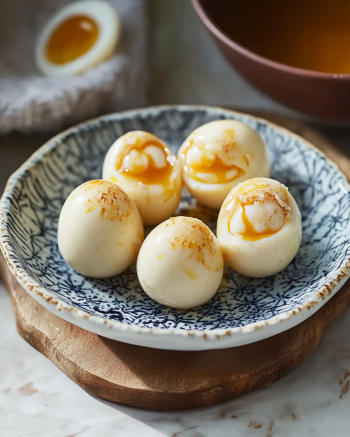
Chinese Tea Leaf Eggs are a visual and culinary delight, combining subtle tea aromas with the rich flavors of soy sauce and spices. The marbled pattern, created by gently cracking the eggshells, makes each egg a piece of edible art.
This traditional Chinese snack is simple to prepare yet offers complex flavors with each bite. Perfect as an appetizer, snack, or addition to any meal, these eggs also make a fantastic conversation starter at parties. With their beautiful appearance and unique taste, they are sure to impress both family and guests alike.
FULL RECIPE
Ingredients:
- 6 large eggs
- 4 cups water
- 2 tablespoons soy sauce
- 1 tablespoon black soy sauce (optional, for a darker color)
- 2 teaspoons sugar
- 1 tablespoon loose black tea leaves or 2 tea bags
- 2 whole star anise
- 1 small cinnamon stick
- 1 teaspoon Sichuan peppercorns
- 2 strips dried tangerine peel (optional)
Directions:
- Place eggs in a saucepan and cover with water. Bring to a boil over medium heat, then reduce heat to a simmer. Cook the eggs for 8 minutes.
- Remove the eggs and run them under cold water to cool. Gently crack the eggshells with the back of a spoon, creating a webbed pattern without removing the shell.
- In the same saucepan, combine 4 cups of water, soy sauce, black soy sauce, sugar, tea leaves, star anise, cinnamon stick, Sichuan peppercorns, and tangerine peel. Bring the mixture to a boil, then reduce to a simmer.
- Add the cracked eggs back to the saucepan. Simmer for 1–2 hours, turning occasionally to ensure even coloring and flavor infusion.
- Remove from heat and let the eggs steep in the liquid for at least 6 hours or overnight for a stronger flavor.
- Peel the eggs before serving to reveal the marbled design. Serve warm or chilled as a snack, appetizer, or side dish.
Prep Time: 10 minutes | Cooking Time: 2 hours | Total Time: 2 hours 10 minutes
Kcal: 70 kcal | Servings: 6 eggs
The History and Origin of Chinese Tea Leaf Eggs
Chinese Tea Leaf Eggs, also known as cha ye dan (茶叶蛋), are a traditional Chinese snack that has been enjoyed for centuries. Originating in the Fujian province, these eggs were initially a practical way to preserve food using readily available spices and tea leaves. Over time, the dish evolved into a popular street food item found across China, particularly in night markets and roadside stalls. The marbled design symbolizes good luck and prosperity in Chinese culture, making these eggs a staple during festivals like the Lunar New Year.
The Science Behind the Marbling Effect
The unique marbled pattern on the eggs is achieved by cracking the shells without removing them. As the eggs simmer in the flavorful broth, the liquid seeps through the cracks, staining the egg whites and creating intricate designs. The longer the eggs steep, the more pronounced the marbling and the richer the flavor.
Variations of Chinese Tea Leaf Eggs
While the classic recipe uses black tea, soy sauce, and Chinese five-spice ingredients like star anise and cinnamon, there are many regional variations:
- Taiwanese Style: Often includes additional spices like ginger and a sweeter flavor profile.
- Herbal Tea Eggs: Uses Chinese medicinal herbs to add health benefits.
- Modern Twists: Some cooks experiment with different teas, such as green tea or Earl Grey, to introduce new flavors.
Cooking Tips for Perfect Results
- Cracking Technique: Gently tap the eggshell with a spoon to create a webbed pattern. Avoid cracking too hard to prevent the shell from peeling off.
- Marination Time: For the best flavor, let the eggs steep in the broth overnight in the refrigerator.
- Adjusting Flavors: Experiment with the saltiness and sweetness by modifying the soy sauce and sugar proportions. Add more spices for a stronger aroma.
How to Serve Chinese Tea Leaf Eggs
- Snacks or Appetizers: Serve them warm or chilled with a sprinkle of sesame seeds for extra flavor.
- Side Dish: Pair them with congee or noodle soups for a comforting breakfast or lunch.
- Lunchbox Addition: These eggs are an excellent protein-packed addition to bento boxes or picnic meals.
Nutritional Value
Chinese Tea Leaf Eggs are low in calories but high in protein, making them a nutritious and satisfying snack. The spices used in the recipe, such as star anise and cinnamon, may also have health benefits, including aiding digestion and improving circulation.
Fun Facts About Chinese Tea Leaf Eggs
- Festival Food: These eggs are commonly prepared during the Mid-Autumn Festival and Lunar New Year as a symbol of unity and prosperity.
- Global Appeal: The recipe has gained popularity worldwide, with adaptations found in neighboring countries like Taiwan, Malaysia, and Singapore.
- Street Food Staple: In China, you’ll often find vendors selling these eggs near train stations, providing a quick and affordable snack for travelers.
The Cultural Significance of Chinese Tea Leaf Eggs
Tea Leaf Eggs hold a cherished spot in Chinese culinary traditions. Beyond their taste and appearance, they symbolize life, renewal, and prosperity. The act of cracking and steeping the eggs aligns with cultural ideas of transformation—turning a simple egg into something uniquely beautiful and flavorful.
During festivals, these eggs often represent unity and are shared among family members as a gesture of togetherness. They are particularly popular during the Lunar New Year, where their round shape signifies completeness and the marbling reflects good fortune.
The Role of Tea in the Recipe
Tea, an integral ingredient, isn’t just for flavor—it also adds subtle tannins that contribute to the eggs’ slightly earthy undertones. While black tea is traditional, you can experiment with other types:
- Pu-erh Tea: For a deeper, fermented flavor.
- Green Tea: Offers a lighter, grassy taste.
- Jasmine Tea: Infuses a floral note, making the eggs aromatic.
Creative Ways to Serve Tea Leaf Eggs
- Ramen Topping: Slice the marbled eggs in half and place them atop a steaming bowl of ramen for an aesthetically pleasing and flavorful addition.
- Salads: Dice the eggs and toss them into a cold noodle salad with sesame dressing.
- Fusion Sandwiches: Layer the sliced eggs on a baguette with pickled vegetables and a smear of spicy mayo for a Chinese-inspired banh mi twist.
- Party Platters: Serve them whole on a charcuterie board alongside cured meats, cheeses, and pickled vegetables.
Pairing Chinese Tea Leaf Eggs with Drinks
- Hot Tea: Serve alongside a cup of strong Pu-erh or oolong tea to enhance the earthy flavors.
- Light Lager or Sake: The eggs’ savory and slightly sweet profile pairs beautifully with these beverages, making them ideal for casual gatherings.
- Mocktails: Try pairing with a citrusy mocktail, such as orange and ginger soda, to balance the spice of the eggs.
Storing and Reusing the Tea Broth
After cooking, the tea broth can be strained and stored in the refrigerator for up to a week. Reuse it to make another batch of eggs or as a flavor base for soups and stews. This adds sustainability to your cooking while maximizing flavor.
Nutrition Facts (Per Serving – 1 Tea Egg)
- Calories: 70 kcal
- Total Fat: 5 g
- Saturated Fat: 1.5 g
- Trans Fat: 0 g
- Cholesterol: 185 mg
- Sodium: 200-300 mg (varies based on soaking time)
- Total Carbohydrates: 1 g
- Dietary Fiber: 0 g
- Sugars: 0 g
- Protein: 6 g
Percent Daily Values are based on a 2,000-calorie diet. Individual needs may vary. The exact values may change depending on the ingredients used, the steeping time, and the size of the egg.
Conclusion
Chinese Tea Leaf Eggs are a beautiful fusion of simplicity and sophistication, combining everyday ingredients with intricate flavors and stunning visuals. Steeped in tradition, these marbled eggs not only serve as a delightful snack but also carry deep cultural significance, symbolizing luck and transformation.
Whether you’re enjoying them as part of a family breakfast, adding them to your favorite noodle dish, or serving them at a gathering to impress guests, these eggs are a versatile and timeless addition to your culinary repertoire. Their ease of preparation, customizable flavors, and unique appearance make them a must-try recipe for both seasoned cooks and beginners alike.
Why not give this recipe a try today? Explore the rich heritage and delicious simplicity of Chinese Tea Leaf Eggs, and share the experience with those you love. They’re more than just food—they’re a story on a plate.