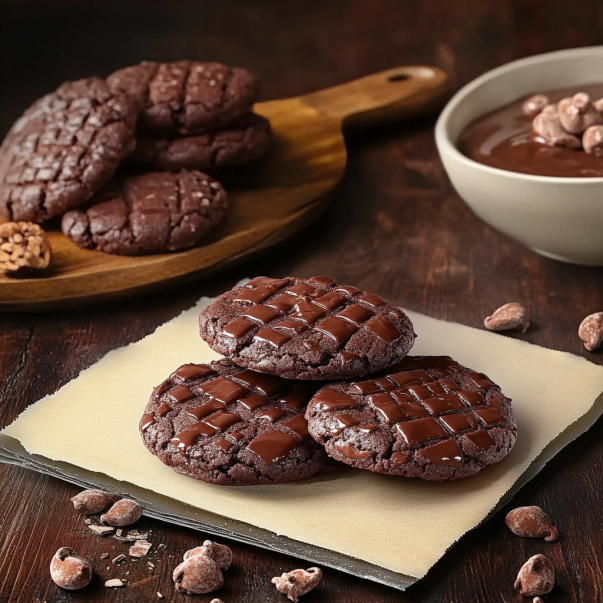
These chocolate cookies are the perfect balance of soft and chewy with a rich chocolate flavor. Made with a simple combination of butter, cocoa powder, and flour, they come together quickly and bake to perfection. Whether you’re baking for a special occasion or simply treating yourself to a sweet snack, these cookies will hit the spot. Serve them with a glass of milk or enjoy them as a stand-alone dessert.
Full Recipe:
Ingredients:
For the Cookies:
- 100g butter (room temperature)
- 90g powdered sugar
- 50ml vegetable oil
- 1 egg
- 25g cocoa powder
- 300g wheat flour
- 1/2 teaspoon salt
- 1 teaspoon baking powder
Directions:
Step 1: Preheat the Oven and Prepare the Baking Sheet
- Preheat your oven to 180°C (350°F).
- Line a baking sheet with parchment paper or lightly grease it with butter or oil to prevent sticking and ensure even baking.
Step 2: Mix the Wet Ingredients
- In a large mixing bowl, combine the butter and powdered sugar.
- Using an electric mixer or a whisk, beat the mixture until it becomes light and fluffy, which helps create the soft texture of the cookies.
- Add the vegetable oil to the butter-sugar mixture and mix until fully combined.
- Crack the egg into the bowl and continue mixing until smooth and homogenous.
Step 3: Add Dry Ingredients
- In a separate bowl, sift together the cocoa powder, wheat flour, salt, and baking powder.
- Gradually add the dry ingredients to the wet mixture, stirring gently until fully incorporated. The dough should be soft, slightly sticky, but manageable.
Step 4: Form the Cookies
- Take small portions of dough and roll them into balls. You can adjust the size depending on how large or small you want the cookies. A tablespoon-sized scoop works well for medium-sized cookies.
- Place the dough balls on the prepared baking sheet, leaving space between each one to allow for spreading.
- Optionally, flatten the dough balls slightly with the back of a spoon or your fingers to create a more uniform shape. If you prefer crinkled cookies, leave them as is.
Step 5: Bake the Cookies
- Bake the cookies in the preheated oven for about 12-15 minutes, or until the edges are firm and the center is slightly soft. The cookies will continue cooking slightly after being removed from the oven, so be careful not to overbake them.
- Once baked, allow the cookies to cool on the baking sheet for a few minutes before transferring them to a wire rack to cool completely.
Step 6: Enjoy!
- Once the cookies are cool, they are ready to be enjoyed.
- Serve them with a glass of milk, or enjoy them on their own as a delightful sweet treat.
- If you have any leftover cookies (though unlikely), store them in an airtight container to keep them fresh.
Nutritional Information (Per Cookie):
- Calories: 160 kcal
- Fat: 9g
- Carbohydrates: 20g
- Protein: 2g
- Fiber: 1g
- Sugars: 10g
Preparation and Cooking Times:
- Prep Time: 10 minutes
- Cooking Time: 12-15 minutes
- Total Time: 22-25 minutes
- Servings: Makes approximately 15-20 cookies (depending on size)
These chocolate cookies are simple to make and incredibly satisfying. Whether you’re baking for yourself or sharing with friends and family, these cookies will quickly become a favorite!
The Origins and History of Cocoa Cookies
Cocoa cookies, often referred to as chocolate cookies, have a long and storied history. The introduction of chocolate into European cuisine dates back to the 17th century, when chocolate was first brought to Europe from the Americas. Initially consumed as a drink, chocolate gradually found its way into cakes, pastries, and, eventually, cookies.
The modern cocoa cookie, as we know it today, emerged in the United States in the late 19th and early 20th centuries. Chocolate chip cookies, invented in 1938 by Ruth Wakefield, are arguably the most famous variation of chocolate cookies, but other forms of chocolate-based cookies—such as cocoa cookies—were also popular during this period.
What distinguishes cocoa cookies from other chocolate cookies is the use of cocoa powder as the primary source of chocolate flavor. Cocoa powder imparts a deep, rich chocolate taste to the dough without the need for melted chocolate, allowing the flavor to permeate the entire cookie while keeping the texture soft and chewy.
Over the years, cocoa cookies have evolved into numerous variations, with bakers experimenting with additional ingredients such as nuts, marshmallows, or even a sprinkle of sea salt. Despite these changes, the basic recipe remains a beloved classic in homes and bakeries around the world.
Key Ingredients and Their Role in Creating Perfect Cocoa Cookies
The beauty of this cocoa cookie recipe lies in the simplicity and balance of its ingredients. Let’s break down the key ingredients that give these cookies their signature texture and flavor:
- Butter: Butter is the primary fat used in these cookies, contributing to their rich, tender texture. The butter, when beaten with powdered sugar, helps to create a light, airy dough, which leads to a soft, chewy cookie. It also imparts a rich flavor that complements the cocoa powder.
- Powdered Sugar: Powdered sugar is used instead of granulated sugar because it dissolves more easily into the dough. This contributes to a smooth, soft texture in the final cookie. It also ensures that the cookies are sweet without being overly sugary, allowing the chocolate flavor to shine.
- Vegetable Oil: Oil helps to provide moisture to the dough and contributes to the soft, chewy texture of the cookies. It also ensures that the cookies won’t be too dry or crumbly.
- Egg: Eggs serve as a binding agent, helping to hold the dough together. They also provide structure to the cookies and contribute to their richness.
- Cocoa Powder: Cocoa powder is the star ingredient in this recipe, providing the deep, rich chocolate flavor. It adds complexity to the cookies without weighing them down. Unsweetened cocoa powder is used, so the sweetness of the cookies comes primarily from the powdered sugar.
- Wheat Flour: Flour gives structure to the cookies. The right balance of flour is important to prevent the cookies from being too dense or too flat. When combined with the cocoa powder and the other ingredients, flour creates a soft yet firm dough that results in cookies with just the right bite.
- Baking Powder: Baking powder acts as a leavening agent, helping the cookies rise slightly during baking. This ensures they don’t spread too much and that they maintain a soft, chewy texture in the center.
- Salt: A pinch of salt helps to balance the sweetness of the cookies and enhances the flavors. Salt is essential in bringing out the richness of the cocoa powder and making the cookies taste well-rounded.
The Science of Baking: How These Ingredients Work Together
The secret to perfect cocoa cookies lies not only in the ingredients but also in how they interact during the baking process. Here’s a closer look at how these ingredients contribute to the texture and flavor of the cookies:
- Butter and Sugar Creaming: When butter and sugar are beaten together, they trap air, which helps to create a light and airy dough. The creaming process also helps dissolve the sugar, contributing to a smooth cookie dough.
- The Role of Egg: The egg serves as both a binder and a source of moisture. It allows the dough to hold together while also contributing to the soft texture of the cookies.
- Cocoa Powder and Flour: Cocoa powder not only adds flavor but also contributes to the structure of the cookie. When combined with the flour, it creates a dough that holds together while remaining soft. The ratio of cocoa powder to flour is important to ensure the cookies are not too dry or too moist.
- Baking Powder: The baking powder causes the dough to rise slightly, ensuring that the cookies don’t turn out too flat. This allows for the perfect balance between a chewy interior and slightly crisp edges.
Tips for Perfecting Cocoa Cookies
While this recipe is straightforward, there are a few tips to ensure your cookies turn out perfectly every time:
- Do Not Overmix: When incorporating the dry ingredients into the wet ingredients, mix until just combined. Overmixing can lead to dense cookies that lack the soft, chewy texture.
- Use Room Temperature Butter: Room temperature butter blends more easily into the dough, leading to a smoother texture and better incorporation of the other ingredients.
- Chill the Dough (Optional): If you prefer your cookies to hold their shape better while baking, you can chill the dough for about 30 minutes before baking. This will prevent the cookies from spreading too much during baking.
- Check for Doneness: Cocoa cookies bake quickly, so be sure to check them after 12 minutes. The cookies should be firm at the edges but still soft in the center. They will continue to firm up slightly as they cool.
Customizing Your Cocoa Cookies
This basic cocoa cookie recipe serves as a great foundation for customization. Here are some ideas for adding a personal touch:
- Add-ins: You can incorporate chocolate chips, chopped nuts (like walnuts or pecans), or dried fruit (like raisins or cranberries) into the dough for extra texture and flavor.
- Flavor Variations: For a twist on the traditional cocoa cookie, consider adding a teaspoon of vanilla extract or a sprinkle of cinnamon to the dough. These additions will bring extra warmth and depth to the flavor.
- Toppings: Top the cookies with a dusting of powdered sugar, a drizzle of melted chocolate, or even a scoop of ice cream for an indulgent treat.
Conclusion: The Ultimate Cocoa Cookie
Soft, chewy, and rich in chocolate flavor, these cocoa cookies are a perfect indulgence for any occasion. Whether enjoyed with a cup of tea, served at a party, or packed into lunchboxes, these cookies offer a delightful balance of sweetness and texture. The simplicity of the ingredients and the ease of preparation make them an excellent go-to recipe for bakers of all skill levels.
With a few simple tweaks, you can make these cookies your own, tailoring them to your specific tastes. So, next time you’re in the mood for a homemade treat, whip up a batch of these soft and chewy cocoa cookies, and enjoy the irresistible combination of rich chocolate flavor and a melt-in-your-mouth texture.