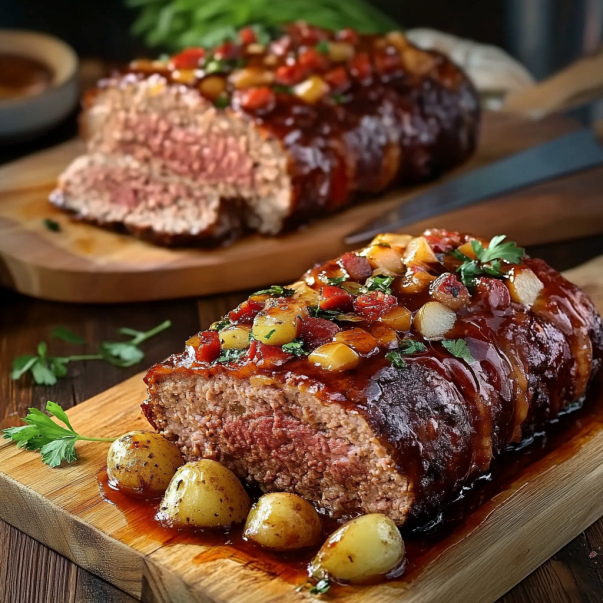
This meatloaf recipe is a savory, hearty dish that’s elevated by the sweet and tangy honey-mustard glaze and the addition of roasted potatoes. The pork neck, mixed with sweet peppers, cheese, and fragrant herbs, is baked to perfection and topped with a glossy glaze that caramelizes during the final stage of cooking. Paired with roasted potatoes, this meal is both comforting and flavorful—perfect for family dinners or gatherings.
Full Recipe:
Ingredients:
For the Meatloaf:
- 1.5 kg (3.3 lb) pork neck (or substitute with pork shoulder)
- 3 cloves garlic, minced
- 2 tsp Dijon mustard
- 1 tsp salt
- 1/3 tsp ground nutmeg
- 1/2 tsp black pepper
- 1 tsp oregano
- 1 tsp paprika
- 2 sprigs fresh rosemary
- 4 sweet peppers, finely chopped
- 200 g (7 oz) cheese, cubed (Cheddar or Gouda work well)
- 2 tbsp capers (optional)
- 3 stalks green onions, finely chopped
For the Honey-Mustard Glaze:
- 2 tbsp honey
- 1 tbsp Dijon mustard
- 1 tbsp soy sauce
For the Roasted Potatoes:
- 1 kg (2.2 lb) new potatoes, halved or quartered
- 2–3 tbsp olive oil
- 40 g (1.4 oz) butter
- 3 cloves garlic, minced
- 2 sprigs fresh rosemary
- Salt and black pepper, to taste
Directions:
Step 1: Prepare the Meatloaf Mixture
- Preheat your oven to 180°C (350°F).
- In a large bowl, combine the minced garlic, Dijon mustard, salt, nutmeg, black pepper, oregano, and paprika. Mix well.
- Rub the seasoning mixture all over the pork neck. Ensure it penetrates the meat using your hands.
- Add chopped sweet peppers, cheese cubes, capers (if using), and green onions. Mix everything thoroughly.
Step 2: Shape and Bake the Meatloaf
- Shape the mixture into a loaf shape and place it on a parchment-lined baking sheet or in a loaf pan.
- Lay the rosemary sprigs on top of the loaf to infuse it with flavor while baking.
- Bake in the preheated oven for 60–70 minutes, or until the internal temperature reaches 70°C (160°F).
Step 3: Prepare the Honey-Mustard Glaze
- About 15 minutes before the meatloaf is done, whisk together honey, Dijon mustard, and soy sauce in a small bowl.
- Brush the glaze generously over the meatloaf, allowing it to caramelize during the last part of baking.
Step 4: Roast the Potatoes
- While the meatloaf is baking, wash and cut the new potatoes into even pieces.
- Toss the potatoes with olive oil, minced garlic, salt, and black pepper in a bowl.
- Spread the potatoes in a single layer on a baking sheet, adding the rosemary sprigs for extra flavor.
- Roast the potatoes in the oven alongside the meatloaf for 35–40 minutes, turning them halfway through. Once golden and tender, toss them with melted butter before serving.
Step 5: Serve and Enjoy
- Remove the meatloaf from the oven and let it rest for 10 minutes to lock in the juices.
- Slice the meatloaf and serve alongside the roasted potatoes.
- Drizzle any remaining honey-mustard glaze over the meatloaf slices for an extra burst of flavor.
Nutritional Information (Per Serving):
- Calories: 480 kcal
- Protein: 35 g
- Carbohydrates: 25 g
- Fat: 27 g
- Fiber: 3 g
- Sugar: 6 g
- Sodium: 850 mg
Recipe Details:
- Prep Time: 25 minutes
- Cooking Time: 70 minutes
- Total Time: 1 hour 35 minutes
- Servings: 6–8
This meatloaf with honey-mustard glaze and roasted potatoes is a perfect combination of savory and sweet, making it a timeless meal that will please everyone at the table. With simple ingredients and easy preparation, it’s an ideal dish for any occasion.
The Origins of Meatloaf
The history of meatloaf dates back to ancient times, though its modern form became a household staple in the United States in the 19th century. The concept of combining ground meat with breadcrumbs, vegetables, and spices is believed to have originated in Europe, where similar dishes were made using leftover meat or offcuts, which were ground up and bound together to form a loaf shape. In the U.S., the dish became popular during the Great Depression as a budget-friendly way to feed a family by stretching inexpensive meat, such as beef, with fillers like breadcrumbs or rice.
Meatloaf, or its predecessors, can be found in the culinary traditions of many countries. For instance, the German “frikadellen” and the Swedish “kottbullar” are both meatloaf-like dishes. Similarly, in Italy, the “polpettone” is a variation of meatloaf that often includes cheese, herbs, and vegetables.
Over the years, meatloaf has evolved from a humble, utilitarian dish into a customizable meal that can be adapted to suit a wide range of tastes and dietary preferences. While beef remains the most popular meat for meatloaf, other meats like pork, turkey, and chicken are also commonly used. This particular recipe, which features pork neck, is an excellent example of how meatloaf can be made more flavorful and tender by choosing the right cut of meat.
Why Pork Neck Makes the Perfect Meatloaf
In traditional meatloaf recipes, ground beef is the go-to choice, but pork can offer a unique flavor and texture that elevates the dish. Pork neck, in particular, is an excellent cut for meatloaf due to its marbling of fat, which ensures that the meat remains juicy and flavorful throughout the cooking process. Unlike leaner cuts of pork or beef, pork neck has just the right amount of fat to keep the meatloaf moist without being greasy.
Additionally, pork has a slightly sweeter and milder flavor than beef, which pairs perfectly with the savory spices and vegetables in this recipe. The use of garlic, Dijon mustard, paprika, and herbs such as oregano and rosemary enhances the natural flavor of the pork, while the sweet peppers and cheese add texture and richness to the mixture.
Substituting pork neck (or shoulder) for beef in meatloaf allows for a richer, more complex flavor profile, and the texture of the cooked meat is tender and juicy. This makes it a great choice for those looking to break away from the traditional beef meatloaf without sacrificing the comforting, hearty qualities that make meatloaf so beloved.
The Role of Vegetables and Cheese in the Meatloaf
Beyond the meat, the vegetables and cheese play a crucial role in adding flavor and texture to the meatloaf. Sweet peppers, for example, contribute a subtle sweetness that balances the savory elements, while the onions and green onions add a mild, aromatic depth of flavor. The capers, though optional, introduce a briny, tangy note that contrasts beautifully with the richness of the pork and cheese.
Cheese is another key ingredient in this meatloaf. It not only adds a delicious creaminess to the filling but also melts into the meat, creating pockets of gooey, flavorful goodness throughout the loaf. In this recipe, Cheddar or Gouda work particularly well because of their smooth textures and bold flavors. The cheese also helps bind the ingredients together, ensuring that the meatloaf holds its shape while baking.
Together, the vegetables and cheese create a more balanced and flavorful meatloaf, ensuring that each bite is a delightful combination of savory, sweet, and tangy elements.
The Sweet and Tangy Honey-Mustard Glaze
The honey-mustard glaze is what truly elevates this meatloaf recipe. It adds a perfect balance of sweetness, tanginess, and umami, enhancing the natural flavors of the pork while providing a beautiful, glossy finish. The honey brings a subtle sweetness that complements the savory meat, while the Dijon mustard provides sharpness and a slight tang. The soy sauce ties everything together with its deep, umami flavor, creating a glaze that not only adds flavor but also helps caramelize the surface of the meatloaf during baking.
The glaze can be applied in the last 15 minutes of cooking, allowing it to form a delicious, sticky coating on the meatloaf. This step is crucial for adding an extra layer of flavor and texture that makes the meatloaf irresistible. It also gives the dish a visually appealing sheen, making it perfect for serving at any occasion.
Roasted Potatoes: The Perfect Side Dish
No meatloaf is complete without a delicious side, and roasted potatoes are the perfect complement to this hearty meal. The crispy, golden potatoes, infused with the fragrant flavors of rosemary and garlic, provide a satisfying contrast to the soft and juicy meatloaf. The potatoes are seasoned with olive oil, butter, salt, and black pepper, then roasted until they’re tender on the inside and crispy on the outside. The addition of fresh rosemary sprigs brings a herbaceous note that ties in beautifully with the rosemary used in the meatloaf.
Roasted potatoes are a classic and easy side dish that pair perfectly with the richness of the pork meatloaf. They help balance the flavors of the main dish while adding texture and substance to the plate.
Nutritional Benefits
Pork meatloaf is a relatively healthy option compared to some other meatloaf recipes, especially when you opt for lean cuts of pork like pork neck or shoulder. Pork is an excellent source of high-quality protein, essential vitamins, and minerals like iron, zinc, and B vitamins. The addition of vegetables like sweet peppers, onions, and garlic increases the nutritional value of the dish, providing a good source of fiber, antioxidants, and vitamin C.
The honey-mustard glaze adds a touch of sweetness without overwhelming the dish, and roasted potatoes provide complex carbohydrates for sustained energy. While this dish is rich in flavor and satisfying, it can also be made lighter by adjusting the amount of cheese or using less butter in the roasted potatoes.
Conclusion
Pork meatloaf with honey-mustard glaze and roasted potatoes is a perfect example of how comfort food can be elevated with the right ingredients and techniques. The use of tender pork neck, fresh vegetables, and a sweet-tangy glaze makes this meatloaf a standout dish that will impress both family and guests. Paired with crispy roasted potatoes, it creates a well-rounded, satisfying meal that will become a new favorite in your recipe collection.
Whether you’re making it for a casual weeknight dinner or a special occasion, this meatloaf is sure to be a hit. With its rich flavors, tender texture, and mouthwatering glaze, it proves that comfort food can be both delicious and exciting.