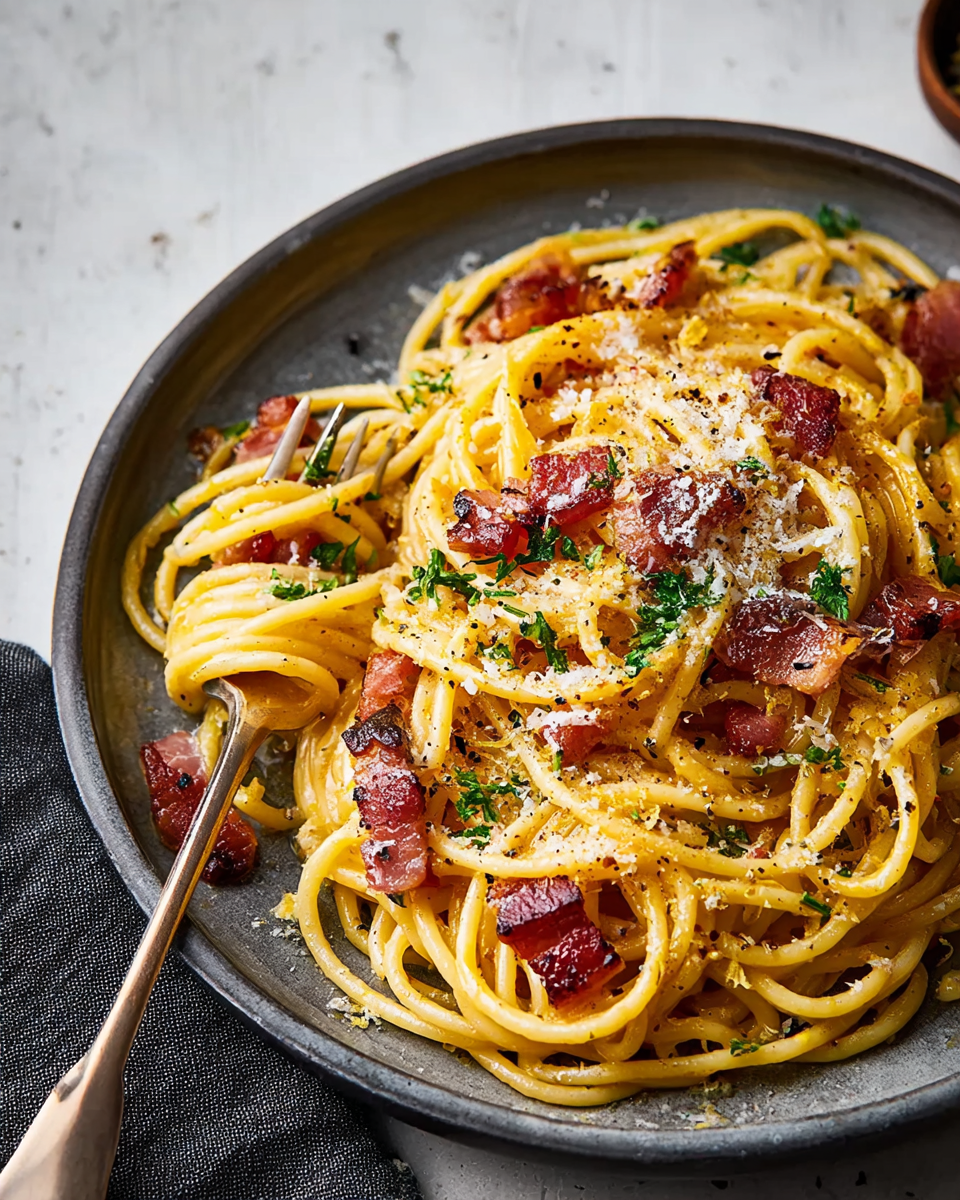
Classic Spaghetti Carbonara is a beloved Roman dish known for its silky, creamy sauce made without a drop of cream. The magic lies in the perfect emulsion of eggs, Parmesan cheese, and hot pasta water, creating a luscious coating on every strand of spaghetti. Crispy bacon adds a smoky, savory punch, while freshly cracked black pepper ties all the flavors together.
This comforting yet sophisticated dish can be made in under 30 minutes, making it ideal for both quick weeknight dinners and special occasions. Its simple ingredients deliver bold, authentic flavors that transport you straight to a cozy trattoria in Rome. Pair it with a glass of white wine and enjoy a true Italian classic at your own table.
Full Recipe:
Ingredients:
-
1 pound dry spaghetti
-
1 tablespoon olive oil
-
8 ounces bacon, diced
-
4 large eggs
-
1 cup grated Parmesan cheese
-
1 teaspoon freshly ground black pepper
-
Salt to taste
-
2 tablespoons chopped fresh parsley (optional, for garnish)
Directions:
-
Bring a large pot of salted water to a boil. Add spaghetti and cook until al dente, about 8 to 10 minutes. Reserve 1 cup of pasta water, then drain.
-
In a large skillet, heat olive oil over medium heat. Add diced bacon and cook until crisp and golden brown, about 5–7 minutes. Remove from heat and set aside.
-
In a mixing bowl, whisk together eggs, Parmesan cheese, black pepper, and a pinch of salt until well combined.
-
Add hot spaghetti to the skillet with bacon (off the heat). Quickly pour in the egg mixture, tossing continuously so the eggs cook gently from the residual heat of the pasta without scrambling. Add a bit of reserved pasta water if needed to create a creamy sauce.
-
Garnish with chopped parsley and more Parmesan if desired. Serve immediately while warm and silky.
Prep Time: 10 minutes | Cooking Time: 15 minutes | Total Time: 25 minutes
Kcal: 520 kcal | Servings: 4 servings
The Timeless Allure of Spaghetti Carbonara
Few dishes in the world of Italian cuisine capture the essence of comfort, simplicity, and elegance quite like Spaghetti Carbonara. With its rich, creamy sauce, smoky bacon, and perfectly cooked pasta, this dish has become a global favorite that transcends cultures and generations. Whether enjoyed in a bustling Roman trattoria or at a cozy dinner table at home, Carbonara never fails to deliver a memorable experience.
What makes Carbonara so beloved is its ability to transform everyday ingredients into something extraordinary. With nothing more than eggs, cheese, black pepper, and bacon, this dish proves that simplicity, when done well, is often the ultimate expression of flavor.
A Glimpse into Carbonara’s Roman Origins
While many dishes have clear, well-documented histories, the origins of Spaghetti Carbonara are surrounded by a bit of mystery. Most food historians agree that Carbonara originated in Rome, but exactly how it came to be is the subject of fascinating debate.
One popular theory suggests that Carbonara was invented in the mid-20th century during World War II. American soldiers stationed in Italy had rations of bacon and powdered eggs. Local Roman cooks, resourceful and inspired, combined these ingredients with pasta to create a hearty, flavorful meal. Over time, this evolved into the classic Carbonara we know today, using fresh eggs, guanciale (cured pork cheek), and aged cheese.
Another theory points to coal workers, or carbonai, as the inspiration. The name “Carbonara” itself is derived from carbonaro, meaning “charcoal burner.” Some believe that the dish was a humble, high-calorie meal enjoyed by these workers, with its flecks of black pepper resembling coal dust.
Regardless of its exact origin, Spaghetti Carbonara became a staple of Roman cuisine in the mid-1900s, eventually spreading far beyond Italy’s borders. Today, it is a beloved dish on menus worldwide, from fine dining establishments to family kitchens.
The Secret Behind Its Creamy Sauce (Without Cream)
One of the most misunderstood aspects of Carbonara is its sauce. Many modern versions outside Italy rely on heavy cream to achieve that rich, velvety texture. But authentic Carbonara uses no cream at all. The luscious sauce comes from the gentle emulsion of eggs, cheese, and starchy pasta water.
When the hot pasta is tossed with the egg and cheese mixture off the heat, the residual warmth gently cooks the eggs, creating a silky coating that clings to each strand. This technique requires a balance of timing and temperature—too hot and the eggs will scramble; too cool and the sauce won’t set.
The result is a luxurious, custard-like texture that feels indulgent without being heavy. Every forkful delivers a harmonious blend of salty, savory, and creamy flavors, punctuated by the bold aroma of freshly cracked black pepper.
The Role of Each Key Ingredient
Though the ingredient list for Carbonara is short, each component plays a crucial role in building the dish’s signature flavor and texture:
-
Pasta: Traditionally, spaghetti is used, though some prefer bucatini or rigatoni. The key is to use high-quality pasta that retains a bit of bite after cooking (al dente), allowing the sauce to adhere beautifully.
-
Eggs: Whole eggs provide richness, while some recipes use a combination of whole eggs and extra yolks for added creaminess. The eggs are the backbone of the sauce, lending body and silkiness.
-
Cheese: Authentic Carbonara typically uses Pecorino Romano, a sharp and salty sheep’s milk cheese. Some modern variations use Parmesan or a blend of both, depending on personal preference.
-
Bacon or Guanciale: While guanciale is the traditional cured meat used in Rome, bacon or pancetta is commonly used outside Italy. The rendered fat from the meat infuses the pasta with deep, savory flavors.
-
Black Pepper: Far from just a garnish, freshly ground black pepper provides warmth and complexity, balancing out the richness of the eggs and cheese.
The interplay of these ingredients demonstrates why Carbonara is more than the sum of its parts. Each element enhances the others, resulting in a dish that feels both rustic and refined.
Carbonara’s Global Evolution
As Spaghetti Carbonara gained popularity around the world, countless variations emerged. In some countries, cream is added for a richer sauce; in others, vegetables like peas, mushrooms, or even seafood are incorporated. While purists may argue that these adaptations stray from tradition, they also reflect how food evolves through cultural exchange.
In the Philippines, for example, Carbonara often features a cream-based sauce with ham and mushrooms, making it a popular dish for family gatherings and celebrations. In the United States, bacon or pancetta often takes the place of guanciale, and the sauce may be made extra rich with heavy cream.
These variations may differ from the Roman original, but they showcase the versatility and universal appeal of the dish. Carbonara has become a canvas for creativity, while still maintaining its core identity as a comforting, pasta-based dish.
Pairing Ideas to Elevate the Experience
Although Carbonara is satisfying on its own, pairing it with the right accompaniments can transform it into a full, memorable dining experience.
-
Starters: A light green salad with a tangy vinaigrette or roasted vegetables can balance out the richness of the pasta.
-
Beverages: A crisp white wine, such as Pinot Grigio or Sauvignon Blanc, complements the dish without overpowering it. Sparkling water with a slice of lemon is also a refreshing choice.
-
Sides: Warm garlic bread, a small antipasto platter, or marinated olives make excellent companions.
-
Desserts: Finish the meal with a light dessert like panna cotta, tiramisu, or fresh fruit to keep the palate refreshed.
Tips for Perfecting Your Carbonara
Even though the recipe is simple, Carbonara requires attention to detail to get it just right. Here are a few pro tips:
-
Cook the pasta al dente: Slightly undercooking the pasta ensures it has the perfect texture and can absorb the sauce effectively.
-
Reserve pasta water: The starchy water is essential for emulsifying the sauce.
-
Toss off the heat: Adding the egg mixture while the pan is off the heat prevents scrambling and creates a smooth sauce.
-
Use freshly grated cheese: Pre-grated cheese may not melt properly and can lead to clumps.
-
Serve immediately: Carbonara doesn’t reheat well, so it’s best enjoyed fresh and hot.
Why Carbonara Endures
So why has Spaghetti Carbonara stood the test of time and remained one of the most beloved pasta dishes in the world? The answer lies in its balance of simplicity and sophistication. It’s a dish that anyone can learn to make, yet it always feels special.
It also embodies the essence of Italian cooking: respect for ingredients, careful technique, and a focus on flavor rather than complexity. Every bite of Carbonara is a reminder that the best meals often come from humble beginnings.
Conclusion
In a world where culinary trends come and go, Spaghetti Carbonara remains a timeless classic. Its story is one of ingenuity, cultural exchange, and culinary artistry. From its mysterious Roman roots to its place on tables around the world, Carbonara continues to bring people together over shared meals and unforgettable flavors.
Whether you stick to the traditional Roman method or put your own twist on it, Carbonara is more than just pasta—it’s a celebration of simplicity, comfort, and culinary heritage. As long as there are lovers of good food, this dish will continue to warm hearts and satisfy appetites for generations to come.