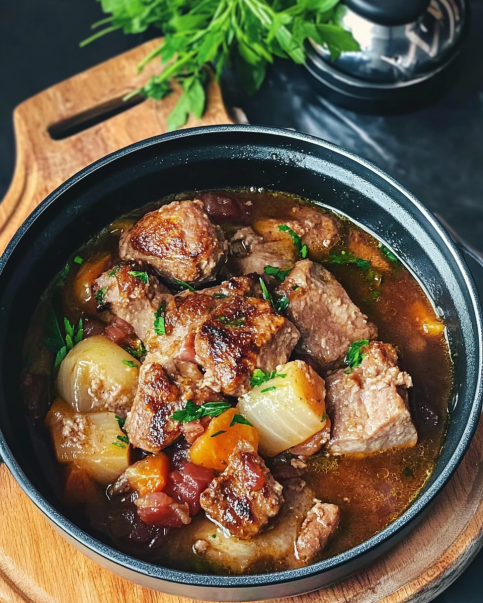
Full Recipe:
Ingredients:
For the Stew:
- 800g Pork (shoulder or pork belly, cut into bite-sized cubes)
- Butter (for sautéing)
- 1 Onion, finely chopped
- 4 Cloves Garlic, minced
- 1 Carrot, peeled and diced
- 2 Bell Peppers, sliced or diced
- A handful of Parsley, chopped
- 400g Potatoes, peeled and cubed
- 1 Packet of Double Cream (approximately 200ml)
- Salt and Pepper, to taste
- Water or Broth, as needed for cooking
Directions:
Step 1: Prepare the Ingredients
- Wash and peel the vegetables. Dice the carrot and potatoes, slice the bell peppers, and finely chop the onion and parsley.
- Cut the pork into bite-sized cubes, ensuring uniform sizes for even cooking.
Step 2: Sear the Pork
- Heat a large pot or Dutch oven over medium heat and melt a generous amount of butter.
- Add the pork cubes to the pot, searing them on all sides until golden brown. Work in batches if necessary to avoid overcrowding the pot. Once browned, remove the pork and set it aside.
Step 3: Sauté the Vegetables
- In the same pot, add a little more butter if needed and sauté the onion until translucent, about 3–4 minutes.
- Add the minced garlic and cook for another minute, stirring constantly to prevent burning.
- Stir in the diced carrot and bell peppers, cooking for 5–7 minutes until slightly softened.
Step 4: Combine the Ingredients
- Return the seared pork to the pot and mix it with the sautéed vegetables.
- Add the cubed potatoes and stir to combine. Season generously with salt and pepper.
Step 5: Add Liquid and Simmer
- Pour in enough water or broth to cover the ingredients. Stir well, bring the mixture to a boil, then reduce the heat to low.
- Cover the pot and let the stew simmer for 45–60 minutes, or until the pork is tender and the potatoes are cooked through. Stir occasionally and add more liquid if needed.
Step 6: Add the Cream
- Once the pork and vegetables are cooked, pour in the double cream and stir gently to combine.
- Let the stew simmer for another 5–10 minutes, allowing the flavors to meld and the sauce to thicken slightly.
Step 7: Garnish and Serve
- Remove the stew from heat and sprinkle with freshly chopped parsley.
- Serve hot with crusty bread, rice, or your favorite side dish.
Nutritional Information:
(Note: Nutritional values are approximations based on common ingredients.)
Serving Size: 1 bowl (approximately 1/6 of the total recipe)
- Calories: 450-500 kcal
- Protein: 35g
- Carbohydrates: 35g
- Fat: 25g
- Saturated Fat: 10g
- Cholesterol: 85mg
- Sodium: 400mg
- Fiber: 4g
- Sugar: 5g
These values will vary based on the specific cuts of pork and the type of broth or cream used.
Enjoy your creamy pork stew with your favorite sides!
Origins and History of Pork Stew
Stews, in general, are one of the oldest forms of cooking, with a history that dates back to the beginning of human civilization. The concept of slow-cooked meals that meld together the flavors of meat and vegetables has been around for centuries. Pork, in particular, has been a staple meat in various cultures around the world. It is a versatile and affordable meat that can be used in a wide variety of dishes, including stews, roasts, and sausages.
In many European countries, stews have long been a comfort food enjoyed by families. For instance, in Ireland, a version of pork stew made with root vegetables like potatoes and carrots is a common sight in homes during the colder months. The combination of tender meat and hearty vegetables makes it an ideal meal for nourishment and warmth.
Similarly, in Southern American cuisine, pork is often featured in slow-cooked dishes, such as Brunswick stew, where it is combined with vegetables like corn and lima beans. These stews were traditionally prepared over the course of several hours, allowing the flavors to meld together into a rich and satisfying meal.
While the ingredients and methods may vary by region, the heart of any pork stew remains the same: tender meat, flavorful broth, and an array of vegetables that offer both nourishment and flavor.
Why Choose Pork for Your Stew?
Pork is an excellent choice for stews due to its tenderness, rich flavor, and versatility. Depending on the cut of pork you choose, the meat can provide a range of textures—from the slightly fatty and juicy cuts like pork belly to the leaner and tender cuts like pork shoulder. Both are ideal for slow cooking, as they absorb the flavors of the other ingredients and become incredibly tender when simmered for long periods of time.
Additionally, pork’s mild yet savory taste pairs wonderfully with a wide range of vegetables, herbs, and spices, making it the perfect base for a flavorful stew. This particular recipe calls for cuts of pork such as pork shoulder or belly, which are perfect for creating a rich, hearty broth that brings all the ingredients together in a comforting dish.
The Benefits of Pork Stew
A well-prepared pork stew offers a variety of nutritional benefits that make it a wholesome meal for your family. Pork is an excellent source of protein, which is essential for building and repairing tissues, producing enzymes and hormones, and supporting overall growth. It is also rich in essential vitamins and minerals, including B vitamins like niacin and thiamine, which are vital for maintaining energy levels and healthy metabolism.
In addition to protein, pork provides zinc and iron, two important minerals for immune function and oxygen transport. The vegetables in the stew—such as carrots, bell peppers, and potatoes—add their own nutritional value. Carrots are rich in vitamin A, which is vital for maintaining healthy vision, while bell peppers are an excellent source of vitamin C, which supports immune health and collagen production. Potatoes contribute a healthy dose of fiber and potassium, supporting digestive health and proper fluid balance in the body.
The creamy broth made from double cream not only adds richness to the dish but also contributes to a satisfying and filling meal. When prepared with wholesome ingredients, pork stew offers a balanced combination of protein, vitamins, and minerals, making it a nourishing and hearty option for lunch or dinner.
Variations of Pork Stew
One of the great things about pork stew is its versatility. You can customize the recipe to suit your preferences or to take advantage of seasonal ingredients. Here are a few variations you might want to try:
- Spicy Pork Stew: For those who enjoy a little heat, you can add chili peppers or hot sauce to the stew. Adding a bit of smoked paprika or cayenne pepper will give the stew an extra layer of flavor and spice.
- Sweet and Savory Pork Stew: Consider adding fruits like apples or dried apricots to the stew. The sweetness of the fruit contrasts nicely with the savory pork and creates a beautiful balance of flavors.
- Root Vegetable Pork Stew: You can swap out the bell peppers and potatoes for other root vegetables like parsnips, turnips, or sweet potatoes. These vegetables add a unique sweetness and texture to the stew.
- Herb-Infused Pork Stew: Fresh herbs like thyme, rosemary, and bay leaves can be added to the stew for a more aromatic and earthy flavor. These herbs pair well with the richness of the pork and vegetables, creating a flavorful depth.
- Vegetarian Pork Stew: If you’re looking for a meatless option, you can replace the pork with plant-based meat substitutes or hearty vegetables like mushrooms, eggplant, or lentils. This variation can still maintain a comforting and filling quality without using animal products.
The Importance of Slow Cooking
One of the key factors that make pork stew so delicious is the method of slow cooking. The process of simmering the pork and vegetables together allows the flavors to meld and intensify over time. Slow cooking also breaks down the collagen in tougher cuts of pork, turning them into melt-in-your-mouth pieces of meat. The longer the stew simmers, the more tender the pork becomes, and the more complex the flavor profile.
Using a Dutch oven or large pot is ideal for this type of cooking, as it retains heat well and ensures even cooking. Simmering the stew on low heat also helps to preserve the nutrients in the vegetables, allowing them to retain their natural flavors and textures.
For those with time constraints, a slow cooker or pressure cooker can also be used to make pork stew. While the cooking times may vary, the result is still a tender and flavorful dish that is perfect for busy nights.
Tips for Perfecting Your Pork Stew
- Searing the Pork: Don’t skip the searing step. Browning the pork before adding it to the stew helps to develop a deeper, more complex flavor. It also creates a nice texture on the meat, giving it a satisfying crust.
- Don’t Overcrowd the Pot: When searing the pork, make sure not to overcrowd the pot. If there are too many pieces of meat in the pot at once, they will steam instead of brown, which can result in a less flavorful stew.
- Season Well: Be sure to season your stew generously with salt and pepper. Taste the stew as it simmers and adjust the seasoning as needed. The key to a great stew is the balance of flavors, so don’t be afraid to tweak it as you go.
- Use Homemade Broth: If possible, use homemade broth or stock for a richer, more flavorful stew. Store-bought broths can be salty, so be mindful of how much additional salt you add to the dish.
- Let It Rest: After cooking, let the stew rest for a few minutes before serving. This helps the flavors to settle and meld together, creating a more cohesive and flavorful dish.
Conclusion
Pork stew is the epitome of comfort food—a hearty, flavorful dish that is perfect for family meals, gatherings, or just a cozy night in. With its rich broth, tender pork, and wholesome vegetables, it offers a delicious and satisfying meal that is easy to prepare and incredibly versatile. Whether you stick to the classic recipe or experiment with different variations, this dish is sure to become a favorite in your kitchen. So, gather your ingredients, prepare your stew, and enjoy the warmth and comfort that only a good homemade stew can provide.