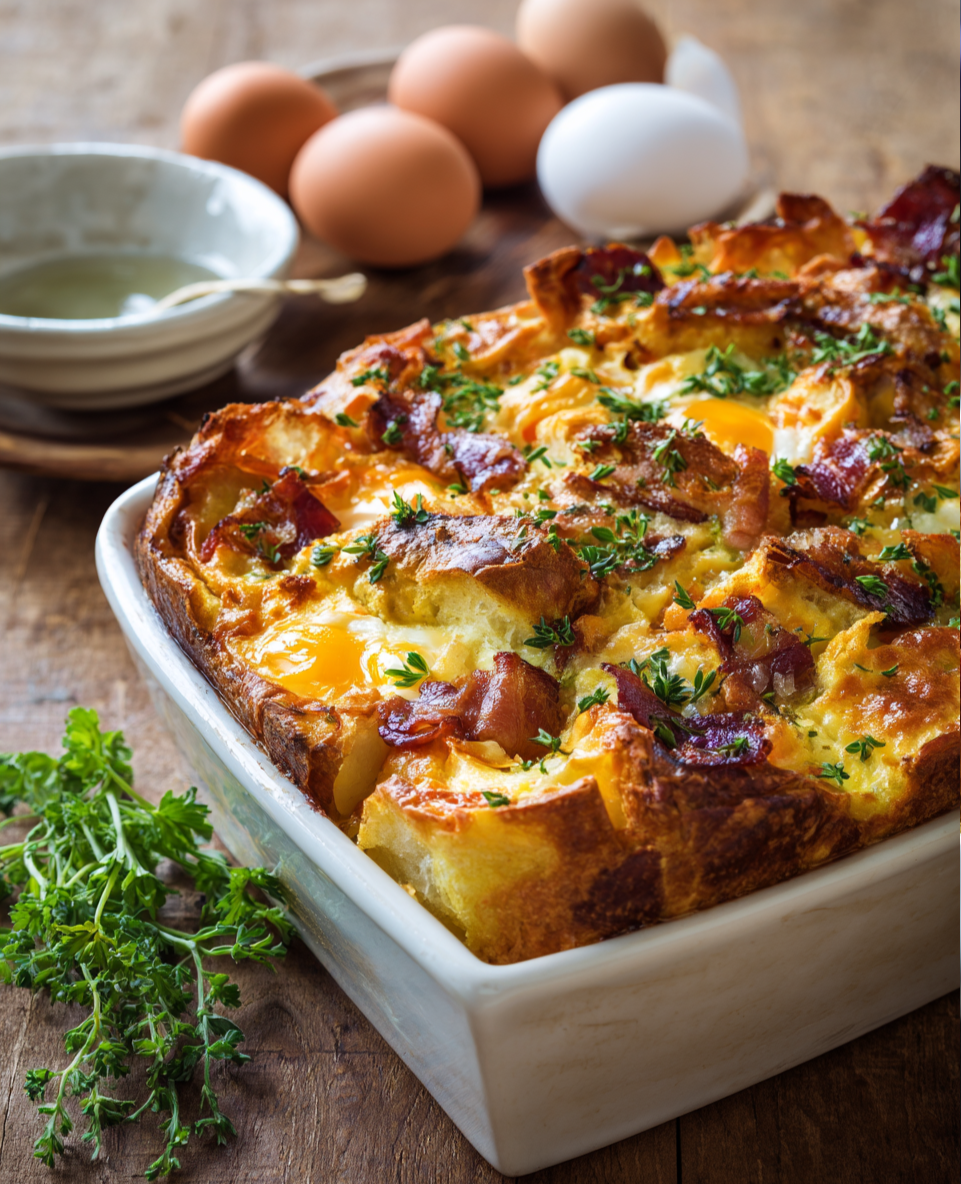
A hearty, crowd-pleasing egg and bread casserole layered with sausage and cheese that’s perfect for holiday mornings.
FULL RECIPE
Ingredients:
-
1 (20 oz) package breakfast sausage, browned and drained
-
6 cups cubed French bread or day-old bread
-
8 large eggs
-
2 ½ cups milk
-
8 ounces shredded cheddar cheese
-
2 tablespoons butter, melted
-
1 teaspoon dried mustard
-
½ teaspoon salt
-
¼ teaspoon black pepper
Directions:
-
Preheat the oven to 350°F (175°C). Grease a 9×13 inch (or similar size) baking dish.
-
Spread the cubed bread evenly in the baking dish. Sprinkle the cooked sausage over the bread.
-
In a large bowl, whisk together eggs, milk, mustard, salt, and pepper. Pour the egg mixture over bread and sausage, pressing lightly so bread absorbs liquid.
-
Drizzle melted butter over the top, then sprinkle cheddar cheese evenly.
-
Let stand for 10 to 15 minutes to allow the bread to soak up the custard.
-
Bake in the preheated oven for 45 to 50 minutes, or until set in the center and golden on top.
-
Let cool for 5 to 10 minutes before slicing and serving.
Nutritional Information (estimated per serving, assuming 8 servings):
-
Calories: ~390 kcal
-
Total Fat: ~24 g
-
Saturated Fat: ~10 g
-
Cholesterol: ~200 mg
-
Sodium: ~650 mg
-
Carbohydrates: ~24 g
-
Dietary Fiber: ~1 g
-
Sugars: ~4 g
-
Protein: ~18 g
Origins and Tradition of Casserole Breakfasts
Breakfast casseroles like this one have roots in family and communal cooking traditions, where layering simple ingredients allows for large batches to feed many. They became especially popular in mid-20th century America, when convenience and feed-a-crowd recipes were in demand. This Easter version embodies that tradition: combining bread, eggs, cheese, and meat in one dish for an easy, hands-off breakfast that’s ideal for special occasions and relaxed gatherings. The format also mirrors strata or savory bread puddings, which are beloved for soaking up custard flavors and baking into a firm yet tender texture.
Why the Easter Breakfast Casserole Stands Out
The Easter version of this casserole is more than just a meal — it’s a tradition. It’s often prepared the night before, allowing the flavors to meld beautifully as the bread soaks up the egg mixture. On Easter morning, while families gather and celebrate, the casserole bakes in the oven, filling the home with a comforting aroma that symbolizes warmth, celebration, and togetherness. Its simplicity and versatility make it a favorite not only for holidays but also for lazy weekend mornings.
Flavor Profile and Texture Dynamics
This casserole offers a satisfying balance of richness, savory meatiness, and creamy custard. The browned sausage contributes savory depth and a slightly crisp texture. The cubed bread soaks up the egg mixture, transforming into a soft, almost soufflé-like interior. Meanwhile, melted cheddar cheese on top forms a golden crust that gives a pleasing contrast. Bits of bread that remain slightly exposed to the oven’s heat form light crisp edges. The mustard and pepper provide a subtle sharpness, cutting through the richness and enhancing the overall flavor without overpowering.
Ingredient Roles and Tips for Best Results
-
Bread: Use slightly stale or day-old bread to better absorb the custard without collapsing. French bread or country loaf works well.
-
Sausage: Cook thoroughly and drain excess fat to prevent the casserole from becoming greasy. A flavored sausage (e.g. sage) can add extra interest.
-
Egg + Milk Custard: This combination must be well whisked to achieve a smooth, uniform custard.
-
Cheese Layering: Save some cheese to sprinkle on top so that it browns and crisps in the oven.
-
Soak Time: Letting the mixture rest before baking gives the bread time to absorb the liquid evenly, which helps avoid dry pockets or soggy parts.
-
Temperature & Bake Time: Baking at moderate heat ensures the custard sets through without overbronzing the top. If edges brown too quickly, cover loosely with foil midway.
Customization Ideas
The versatility of this dish is endless. Want a lighter version? Use turkey sausage or replace milk with almond milk. Want more color and nutrition? Add spinach, cherry tomatoes, or mushrooms. Prefer something indulgent? Sprinkle in mozzarella, feta, or even cream cheese for a richer taste. You can even turn it into a vegetarian version by skipping the meat and loading up on veggies.
Serving and Pairing Suggestions
This Easter Breakfast Casserole is excellent served warm, and pairs beautifully with fresh fruit, fruit compote, or a side of greens to contrast the richness. A light mixed greens or spinach salad dressed with a citrus vinaigrette works well. For a brunch spread, offer with muffins, yogurt parfaits, and fresh orange juice or mimosas. Coffee, tea, or milk complement the hearty flavors. Because it reheats well, guests can enjoy leftovers — just reheat individual slices in the oven or toaster oven to preserve crispness.
Storage, Reheating & Make-Ahead Tips
After cooling, wrap leftovers tightly and refrigerate for up to 3 days. To reheat, use a 325°F oven for 10–15 minutes until warmed through. For a make-ahead version, assemble the casserole the night before, cover tightly, and refrigerate. In the morning, bake as directed (you may need an extra 5 minutes). Avoid microwaving large portions, as that can make the interior dense. If you freeze, portion into slices, wrap well, and freeze up to 1 month. Reheat from frozen in a low oven until warmed and crisped.
Health Considerations & Variations
While rich, the casserole can be adapted. Use lean breakfast sausage or turkey sausage to reduce fat. Substitute part or all of the whole milk with lower-fat milk or a milk alternative. Use reduced-fat cheddar cheese or skip the top cheese layer for less richness. For a more vegetable-forward version, add sautéed spinach, bell peppers, or mushrooms. You could also make a crustless version—omit the bread and bake the custard, sausage, and cheese mixture in a greased dish, resulting in a protein-rich breakfast dish with fewer carbs.
Why It’s Ideal for Special Occasions
Holiday mornings often demand dishes that can both impress and serve many without constant supervision. This casserole format fits that need perfectly—you assemble it ahead, let it bake while you relax, and feed a crowd with minimal fuss. During Easter, when families gather in the morning, recipes like this become a centerpiece. Its visual appeal, comforting flavors, and ease make it a beloved choice. It also allows hosts to enjoy time with guests instead of being tied to the stovetop.
Conclusion
This Easter Breakfast Casserole brings together the warmth of baked eggs, hearty sausage, soft custard-soaked bread, and melted cheese to create a show-stopping breakfast dish suitable for celebrations or busy weekend mornings. Its make-ahead nature, ability to serve multiple people, and flexibility for variations make it a versatile recipe to keep in your repertoire. Whether you follow it as written or experiment with meats, cheeses, or vegetables, it delivers comfort and convenience in every bite. Seamlessly balancing flavor, texture, and practicality, this casserole proves that festive breakfasts can be both elegant and effortless.