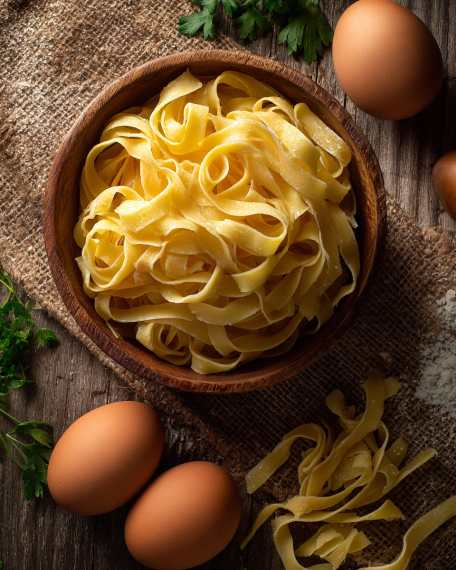
Few dishes evoke the warmth and nostalgia of home like Homemade Egg Noodles. With just flour, eggs, and a pinch of salt, this humble recipe transforms into something magical — soft, chewy ribbons of dough that soak up any sauce, soup, or gravy. Whether served alongside a comforting chicken stew or tossed with butter and herbs, these noodles deliver a taste of tradition and comfort in every bite.
What makes these noodles truly special is their simplicity. You can feel the love in every step — kneading, rolling, and slicing — a timeless process that connects generations of home cooks. The texture is unlike anything store-bought: tender, slightly firm, and wonderfully absorbent. They pair beautifully with savory sauces, meaty ragùs, or even a drizzle of olive oil and fresh parmesan. Once you’ve made them from scratch, you’ll never look at boxed pasta the same way again.
Full Recipe:
Ingredients:
-
2 cups all-purpose flour
-
3 large eggs
-
1 teaspoon salt
-
2 tablespoons milk (optional, for softer noodles)
-
Extra flour for dusting
Directions:
-
In a large mixing bowl, combine flour and salt. Make a well in the center.
-
Crack the eggs into the well and mix them gently with a fork, gradually incorporating flour from the sides until a sticky dough begins to form.
-
Knead the dough on a lightly floured surface for about 5–8 minutes until smooth and elastic.
-
Cover the dough with a clean towel and let it rest for 30 minutes.
-
Roll out the dough into thin sheets (about 1/8 inch thick).
-
Cut into desired noodle widths — from fettuccine-style ribbons to thin spaghetti-like strands.
-
Spread noodles on a lightly floured surface or a clean kitchen towel to dry for at least 30 minutes.
-
To cook, bring a large pot of salted water to a boil. Drop in noodles and cook for 2–4 minutes, or until tender.
-
Drain, toss with butter or sauce, and serve immediately.
Prep Time: 20 minutes | Resting Time: 30 minutes | Cooking Time: 4 minutes | Total Time: 54 minutes
Kcal: 220 kcal | Servings: 4 servings
The Timeless Beauty of Homemade Egg Noodles
Homemade egg noodles have been a beloved kitchen tradition for generations, cherished for their comforting texture and versatility. The combination of just flour, eggs, and salt might seem simple, yet it results in a dish that’s full of warmth, nostalgia, and pure culinary satisfaction. These noodles are far more than just a side dish — they’re a celebration of heritage and craftsmanship that connects home cooks to their roots. Unlike store-bought pasta, which is often dried and preserved, homemade egg noodles offer a freshness and tenderness that elevates any meal they accompany. Whether they’re floating in chicken soup, twirled with creamy sauces, or served alongside a hearty stew, these noodles always bring a touch of home to the table.
The Origins and Cultural Significance of Egg Noodles
Egg noodles have a long and diverse history, appearing in many culinary traditions around the world. They are believed to have originated in Asia thousands of years ago, where early civilizations began combining ground grains with liquid to form doughs that could be cooked in boiling water. Chinese egg noodles, made with flour and eggs, became an integral part of countless dishes like lo mein and chow mein. Over time, similar techniques spread to Europe, where countries such as Italy, Germany, and Poland developed their own variations — from tagliatelle to spaetzle to kluski.
In America, egg noodles gained popularity in the early 20th century, especially in rural kitchens where fresh ingredients were abundant, and simplicity was key. Families would make large batches by hand, drying them on countertops or hanging them on racks for later use. These noodles were a symbol of resourcefulness — turning basic pantry staples into a filling and flavorful meal. Today, homemade egg noodles continue to embody that same spirit of tradition and practicality, bringing generations together over the shared joy of cooking from scratch.
Why Homemade Egg Noodles Are the Best
There’s an undeniable difference between homemade and store-bought noodles. When you make egg noodles from scratch, you control every element — from the ingredients to the thickness of the dough. This freedom ensures superior texture, flavor, and freshness. The inclusion of eggs gives the noodles a rich, golden hue and a tender yet slightly chewy bite that dried pasta simply cannot replicate.
Moreover, homemade egg noodles cook quickly and absorb sauces beautifully, making every dish more flavorful. Their slightly rustic texture holds onto gravies, soups, and creams, creating a more satisfying eating experience. Whether served with butter and herbs or drenched in a rich stew, they adapt to any flavor profile. For many cooks, the process of kneading, rolling, and cutting the dough is therapeutic — a mindful experience that connects them to the food they prepare and the people they serve.
Nutritional Benefits and Healthy Variations
Homemade egg noodles are not only delicious but can also be a nutritious part of a balanced diet. They are a good source of carbohydrates, which provide essential energy for the body, and the eggs add protein and micronutrients like iron and B vitamins. Unlike store-bought options that may contain preservatives or artificial ingredients, homemade noodles are fresh and wholesome, made from simple, natural components.
You can also adapt the recipe to suit your dietary needs. For a higher fiber content, substitute part or all of the all-purpose flour with whole wheat flour. If you prefer a lower-calorie option, reduce the number of egg yolks or use egg whites only. Adding pureed spinach, beetroot, or herbs to the dough not only enhances nutrition but also gives your noodles a stunning natural color. The possibilities are endless, making homemade egg noodles one of the most flexible and rewarding dishes to make.
The Perfect Complement to Any Dish
Homemade egg noodles are incredibly versatile and can complement almost any meal. Their mild flavor makes them a blank canvas for creativity. You can toss them in butter and fresh herbs for a quick side, or use them as the foundation for a hearty beef stroganoff or chicken and mushroom cream sauce. They are also the perfect partner for soups and stews, adding body and comfort to every spoonful.
For special occasions, you can elevate them with truffle oil, parmesan, or sautéed vegetables. On busy weeknights, they can be served simply with olive oil, garlic, and a sprinkle of black pepper. Their adaptability is one of the main reasons why home cooks and professional chefs alike consider egg noodles a kitchen staple.
The Art of Making Egg Noodles
One of the most satisfying aspects of this recipe is how tactile and personal it feels. Making egg noodles by hand invites you to slow down and engage with each step. The mixing of flour and eggs, the kneading until smooth, and the rhythmic rolling out of dough all contribute to a sensory cooking experience that’s deeply rewarding.
The key to success lies in balance — the right ratio of flour to egg, and enough kneading to create structure without toughness. Resting the dough is essential, as it allows the gluten to relax, resulting in smoother rolling and a softer final texture. Rolling the dough thin and cutting it evenly ensures that the noodles cook uniformly. It’s a beautiful process that transforms humble ingredients into something extraordinary.
A Taste of Tradition and Family Connection
For many, homemade egg noodles carry emotional significance. They evoke memories of grandparents’ kitchens, family gatherings, and cozy Sunday dinners. Making noodles together can be a wonderful bonding activity, where generations share stories, laughter, and the art of cooking. The smell of fresh dough, the sound of rolling pins, and the sight of golden noodles drying on a counter all bring a sense of home and belonging.
These noodles also symbolize resilience and creativity — the ability to create comfort and nourishment from the simplest ingredients. They remind us that good food doesn’t have to be complicated or expensive; it just needs to be made with care. In a world where convenience often takes precedence, homemade egg noodles stand as a timeless reminder of what cooking truly means — love, effort, and connection.
Cooking and Serving Tips
When cooking homemade egg noodles, timing is everything. Fresh noodles cook much faster than dried pasta — usually within two to four minutes — so it’s important to monitor them closely. Boil them in salted water to enhance their flavor and prevent them from sticking. Once cooked, drain and toss them lightly with butter or oil to maintain their smoothness.
For added flair, you can infuse the dough with herbs like basil, parsley, or thyme. These aromatic additions give the noodles a subtle yet distinct flavor that pairs wonderfully with both light and rich sauces. You can also dry your noodles completely for longer storage — simply lay them out in a cool, dry place until hardened, then store them in an airtight container for up to a month.
Homemade Egg Noodles Around the World
It’s fascinating how similar versions of egg noodles appear in cuisines across continents. In Italy, they take the form of tagliatelle or pappardelle; in Germany, spaetzle; in Japan, ramen; and in Poland, kluski. Each culture has adapted the basic concept of flour and eggs to fit its regional ingredients and culinary traditions. What remains constant is their universal appeal — comforting, satisfying, and endlessly customizable.
This global presence highlights the shared human love for simple, nourishing food. From the bustling noodle stalls of Asia to cozy European kitchens, the humble egg noodle has crossed borders and stood the test of time.
Why Homemade Egg Noodles Are Worth the Effort
In a world where convenience foods dominate, taking the time to make homemade egg noodles is a powerful act of intention. It’s about slowing down, appreciating the process, and valuing quality over speed. The flavor of freshly made noodles, their silky texture, and their ability to soak up sauces make every minute spent worthwhile. Even beginners can master the technique with a bit of practice, and the satisfaction of creating something from scratch is unmatched.
Beyond taste, making your own noodles builds a deeper relationship with food. It reminds us that great meals come not just from ingredients, but from the hands and hearts that make them. Each roll of the pin, each slice of dough — they’re all part of a story that ends in a dish filled with love and comfort.
Conclusion
The allure of Homemade Egg Noodles lies not only in their delicious flavor but in the experience of making them. They embody tradition, creativity, and connection — the hallmarks of truly meaningful cooking. These noodles transform simple ingredients into a dish that nourishes both body and soul. Whether you serve them with a rich sauce, a hearty stew, or simply a pat of butter, they bring comfort, nostalgia, and joy to the table.
In every culture and every kitchen, handmade noodles remind us of what cooking is truly about: slowing down, sharing moments, and finding happiness in the simple act of creating food from scratch. That’s why homemade egg noodles remain one of the most treasured recipes in the world — timeless, versatile, and made with love.