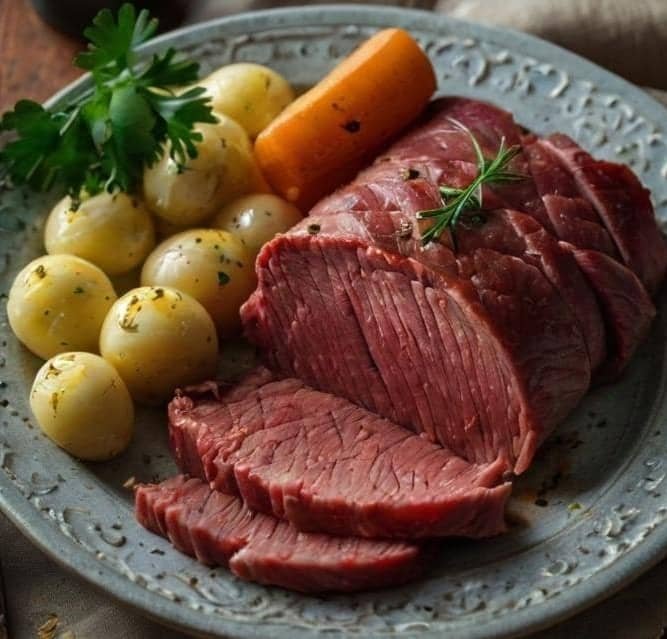
Irish Boiled Dinner (Corned Beef)

Irish Boiled Dinner—also known as Corned Beef and Cabbage—is a classic dish that brings together tender corned beef and hearty vegetables like carrots, potatoes, and cabbage, all simmered together in a flavorful broth. This comforting and easy-to-make dish is a staple in Irish-American homes, especially around St. Patrick’s Day, but it’s perfect for any occasion when you want a hearty, satisfying meal.

full recipe:

Ingredients:

  • 1 (4-5 lb) corned beef brisket (with spice packet, if available)
  • 1 large onion, peeled and quartered
  • 6-8 medium potatoes, peeled and quartered (Yukon Gold or red potatoes work well)
  • 6-8 large carrots, peeled and cut into large chunks
  • 1 medium head of cabbage, cut into wedges
  • Water (enough to cover the corned beef by 6 inches)
  • Salt and pepper, to taste
  • Optional: 2-3 bay leaves, garlic cloves, or a pinch of mustard seeds for additional flavor

Directions:

1. Prepare the Corned Beef:

Rinse the corned beef brisket under cold water and place it in a large pot. Cover with water (about 6 inches above the meat) and add the spice packet (if included). Bring to a boil, then reduce heat and simmer for 3 to 3.5 hours, or until the corned beef is tender.

2. Add the Onions:

After about 30 minutes, add the quartered onion to the pot to infuse the broth with flavor.

3. Add Carrots and Cabbage:

Once the corned beef has cooked for about 3 hours, add the carrots. Then, place the cabbage wedges and potatoes into the pot. Cover and continue simmering for 30 more minutes, or until the vegetables are tender.

4. Test for Doneness:

Check the vegetables by inserting a fork. They should be tender. The corned beef should also be easy to slice.

5. Final Steps:

Remove the corned beef from the pot and slice against the grain. Arrange the vegetables around the beef on a serving dish. Ladle some of the broth over the dish for extra flavor.

6. Serve:

Serve the sliced corned beef and vegetables with mustard, horseradish, or a tangy vinegar-based sauce on the side. Pair with crusty bread or Irish soda bread for a complete meal.

Presentation Tips:

  • Plating: Place the sliced corned beef in the center of the plate, surrounded by the vegetables. You can fan the meat out or pile it up in a rustic, hearty way.
  • Garnishing: To enhance the look, sprinkle chopped fresh parsley or chives over the vegetables or meat. This adds a pop of color and a fresh, herby contrast to the dish’s richness.
  • Serving Sides: This dish pairs wonderfully with traditional Irish soda bread or any crusty bread to soak up the flavorful broth.

Flavor Variations:

  • Adding Herbs and Spices: You can get creative with additional seasonings. Adding a few cloves of garlic, a splash of apple cider vinegar, or mustard seeds will give the broth a subtle depth of flavor. For a smoky note, consider adding a piece of smoked sausage or ham to the pot.
  • Spicy Twist: If you enjoy heat, you can add a few red pepper flakes or a whole fresh chili to the pot, giving the broth a gentle kick

Why Irish Boiled Dinner Is Loved:

The charm of Irish Boiled Dinner lies in its simplicity and heartiness. It’s a dish that has been passed down through generations, evolving with time but remaining rooted in tradition. The combination of corned beef, vegetables, and aromatic spices creates a well-rounded, comforting meal that feeds the body and soul. Whether you’re serving it on St. Patrick’s Day, at a family gathering, or just on a chilly evening, this dish has a way of bringing people together to celebrate good food and great company.

The History and Cultural Significance of Corned Beef and Cabbage:

To understand the cultural significance of Corned Beef and Cabbage, it’s essential to know its historical context. While corned beef is often considered a staple of Irish cuisine, the truth is that it wasn’t widely consumed in Ireland until it became an export. In Ireland, bacon was the primary meat used in traditional dishes, but Irish immigrants in America found corned beef to be much more affordable, as it was easier to preserve and ship.

The dish became especially popular in Irish-American communities in cities like New York and Boston, where large populations of Irish immigrants settled during the 19th century. These immigrants began pairing the cheap, preserved corned beef with inexpensive root vegetables like cabbage, carrots, and potatoes, resulting in the creation of the dish we know today as Corned Beef and Cabbage. While not originally a part of Irish cuisine, the dish grew in popularity due to the combination of affordable ingredients, ease of preparation, and its satisfying nature.

Today, Corned Beef and Cabbage is often enjoyed during St. Patrick’s Day, especially in the United States, where it has become an iconic dish associated with Irish-American pride. Although the dish is not as common in Ireland itself, its connection to Irish-American culture has made it a symbol of Irish heritage, family tradition, and community..

Optional Flavor Enhancers:

  • 2-3 bay leaves: These will add an earthy, herbal flavor to the broth.
  • Garlic cloves: A few cloves of garlic can enhance the richness of the broth.
  • Mustard seeds: Add a subtle mustardy flavor to the broth if you enjoy a slightly tangy twist.
  • Apple cider vinegar: A splash of vinegar can help balance the richness of the corned beef and vegetables, adding a touch of acidity.

Common Variations of Corned Beef and Cabbage:

While the traditional Irish Boiled Dinner consists of corned beef, cabbage, potatoes, and carrots, there are plenty of ways to customize this dish. Here are a few popular variations:

1. Corned Beef with Mustard and Pickles:

A popular way to enjoy corned beef is by pairing it with mustard and pickles. The tanginess of the mustard and the acidity from the pickles complement the richness of the meat and provide a sharp contrast to the savory vegetables.

  • Spicy mustard or whole grain mustard can add an extra layer of flavor, and some people enjoy serving pickled cabbage or dill pickles on the side as a crunchy, tangy accompaniment.

2. Baked Corned Beef:

Instead of boiling the corned beef, you can also bake it in the oven. This variation involves seasoning the corned beef with mustard, brown sugar, and spices, then roasting it until it forms a flavorful crust.

  • Roasting the corned beef results in a different texture, and it can become caramelized and slightly crispy on the outside while remaining tender inside. Roasting gives the dish a more intense, roasted flavor compared to the gentle simmering of the boiled version.

3. Slow Cooker Corned Beef:

For a convenient hands-off method, you can prepare corned beef in a slow cooker. Simply place the corned beef, vegetables, and spices in the slow cooker in the morning, set it to cook on low for 6-8 hours, and you’ll have a meal ready by dinner time.

  • The slow cooker method allows the flavors to meld together perfectly, and the meat will be fall-apart tender. This is perfect for busy days or when preparing a meal for a crowd.

4. Adding More Vegetables:

While potatoes, carrots, and cabbage are the traditional vegetables used, feel free to experiment with other root vegetables such as:

  • Parsnips: These root vegetables have a sweet, nutty flavor that complements the savory broth.
  • Turnips: Slightly bitter, turnips add a unique flavor to the dish.
  • Celery: For an extra layer of freshness and crunch, add some chopped celery toward the end of cooking.

You can also add leeks or shallots for a mild onion flavor that pairs well with the other vegetables.

5. Corned Beef Hash:

A common leftover meal made from corned beef is corned beef hash. The next day, take your leftover corned beef and vegetables, chop them up, and fry them in a skillet with potatoes and onions until crispy. Serve with eggs for a hearty breakfast.

Tips for Perfect Corned Beef and Cabbage:

To ensure that your Irish Boiled Dinner is cooked to perfection, follow these tips for the best flavor and texture:

1. Choosing the Right Corned Beef:

  • Brisket cut is the best cut of meat for corned beef. You can find flat cut or point cut corned beef. Flat cut is leaner, while the point cut has more marbling, making it juicier and more flavorful. Either can work well, depending on your preference for lean or fatty cuts.
  • Pre-soaked and pre-brined corned beef is typically what you will find in stores, but some butchers sell fresh, uncooked brisket that you can brine yourself. If you go this route, be sure to follow a corned beef brine recipe or buy a pre-made brine kit.

2. Don’t Overcook the Cabbage:

While cabbage is a key element of this dish, overcooking it can cause it to become mushy and lose its vibrant color. Add the cabbage to the pot toward the end of the cooking time and only cook it for about 20-30 minutes, or until tender. If you prefer a firmer texture, check it a few minutes before that.

3. Skim the Broth:

During the cooking process, foam and impurities from the meat may rise to the surface of the broth. Skim off this foam with a spoon periodically. This will ensure that the broth remains clear and flavorful.

4. Let the Corned Beef Rest:

Once your corned beef is done cooking, it’s essential to let it rest for about 10 minutes before slicing. This helps the juices redistribute throughout the meat, making it more tender and juicy. Slice the meat against the grain for the best texture.

5. Don’t Skip the Potatoes:

The potatoes in this dish serve two purposes: they are a filling side dish, and they also help absorb the delicious flavor from the corned beef broth. If you skip the potatoes, you lose a bit of the traditional charm of this dish.

Nutritional Information (Per Serving):

Since the ingredients for Irish Boiled Dinner are largely vegetables and lean meat, this dish can be quite healthy, but the nutritional content can vary based on the portion size and exact ingredients. Here’s a general idea of the nutritional breakdown for one serving (approximately 1/6th of the total dish):

  • Calories: 300-350
  • Protein: 25-30g (mostly from the corned beef)
  • Fat: 15-20g (due to the fat in the corned beef)
  • Carbohydrates: 30-35g (mainly from potatoes and carrots)
  • Fiber: 5-7g (from the vegetables)
  • Sodium: 800-1200mg (corned beef is high in sodium, so it’s best to rinse the meat before cooking and taste the broth before adding more salt)

Conclusion:

Irish Boiled Dinner, also known as Corned Beef and Cabbage, is more than just a meal; it’s a beloved tradition steeped in history and rich flavors. Whether you’re celebrating St. Patrick’s Day or simply craving a comforting dish, this hearty combination of corned beef, cabbage, potatoes, and carrots provides warmth and satisfaction. With its simple ingredients, the dish offers versatility for customization, allowing you to experiment with different vegetables, meats, and cooking methods.

From slow-cooked versions to baked or roasted variations, each approach brings out unique flavors and textures, making it a dish that can be enjoyed year-round. Pair it with mustard, pickles, or even a spicy sauce for an extra kick. Whether served fresh or as a flavorful leftover hash, Irish Boiled Dinner is a timeless favorite that continues to bring families together at the table.

No matter how you prepare it, the dish remains a symbol of Irish heritage and a testament to the joy that simple, well-prepared food can bring. Enjoy the warmth of this traditional meal, share it with loved ones, and celebrate the rich culture that continues to make Corned Beef and Cabbage a cherished part of the culinary landscape.

Leave a Comment