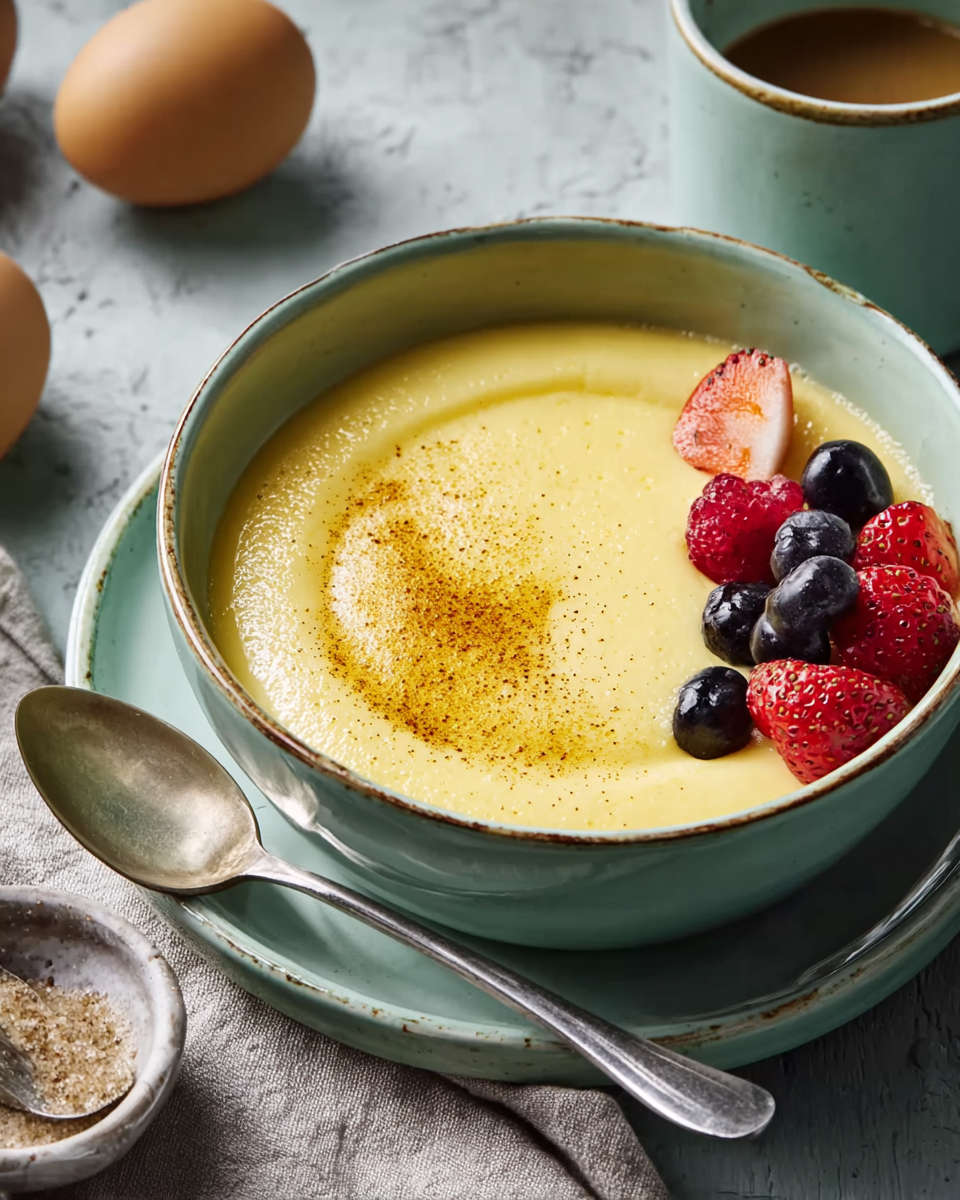
The velvety richness of this homemade custard brings back memories of comfort and warmth with every spoonful. Made from everyday pantry ingredients—eggs, milk, sugar, and a touch of vanilla—this dessert is delightfully simple yet irresistibly satisfying. It’s an excellent choice whether you’re looking for a quick treat or something nostalgic to complement your evening meal. Perfect served warm on a chilly night or chilled for a summer sweet, this custard is endlessly versatile. Spoon it over cake, layer it in trifles, or enjoy it plain—there’s no wrong way to indulge in this creamy classic. Its smooth texture and gentle sweetness are sure to win over everyone at the table.
Full recipe:
Ingredients:
-
4 cups milk
-
1 teaspoon vanilla extract
-
1 teaspoon butter
-
4 large eggs
-
½ cup white sugar (adjust up to ¾ cup for a sweeter version)
-
3 tablespoons cornstarch
Directions:
-
In a medium saucepan, combine the milk, vanilla extract, and butter. Cook over medium heat until it begins to simmer. Do not allow it to boil. Remove from heat.
-
In a large mixing bowl, whisk together the eggs, sugar, and cornstarch until smooth and the sugar dissolves completely.
-
Return the saucepan to low heat. Slowly pour the egg mixture into the warm milk mixture, whisking constantly to avoid curdling.
-
Continue to stir over low heat for 5 to 10 minutes, or until the custard thickens and coats the back of a spoon.
-
Serve warm, or allow it to cool slightly before covering and refrigerating.
-
Enjoy on its own or as a base for trifles, tarts, or layered desserts.
Prep Time: 10 minutes | Cooking Time: 10 minutes | Total Time: 20 minutes
Kcal: 195 kcal | Servings: 6 servings
The Timeless Charm of Simple Egg Custard: A Classic Dessert Reimagined
When it comes to comfort desserts, few treats can rival the nostalgic warmth and velvety texture of a well-made egg custard. Simple, elegant, and endlessly versatile, egg custard is a dish that has stood the test of time. Made with just a handful of pantry staples—milk, eggs, sugar, and vanilla—this dessert is the epitome of what makes classic cooking so rewarding: simple ingredients, carefully prepared, yielding a dish that’s more than the sum of its parts.
In this article, we’ll take a closer look at the origins of custard, explore how to make it properly at home, offer helpful tips for success, and share a few modern variations that keep this traditional dish fresh and exciting.
A Sweet History: The Origins of Custard
The word “custard” originates from the French word croustade, originally referring to a savory tart with a crust. Over time, it evolved into the sweet, silky-smooth dessert we know today. Egg custards have existed since at least the Middle Ages, when they were often used as fillings in pastries and pies. The mixture of milk and eggs—thickened over gentle heat—was seen as both a nourishing and luxurious dish.
In fact, egg custard is a culinary cornerstone found across many cultures. From flan in Spain and crème caramel in France to leche flan in the Philippines and dan tat (egg tarts) in China, variations of this dish abound. Each culture adds its own spin, whether it’s incorporating spices, steaming it in ramekins, or baking it in flaky crusts. Despite these differences, the core of a custard remains the same: a smooth, rich, egg-thickened cream.
What Makes a Good Custard?
The beauty of egg custard lies in its texture—a delicate balance between liquid and solid. When made correctly, it should be luxuriously smooth, slightly wobbly, and rich without being heavy.
Here’s what you need to achieve the perfect result:
-
Eggs: The structure-builder. Whole eggs (as used in this recipe) offer a well-rounded texture, while egg yolks only will yield a richer and denser custard.
-
Milk: Whole milk is traditional and provides a balanced richness. You can also use part cream for a more decadent result.
-
Sugar: Adds sweetness and softens the egg proteins, contributing to a smooth texture.
-
Cornstarch: Acts as a thickening agent, ensuring the custard sets well and doesn’t curdle easily.
-
Butter and vanilla: Add depth and flavor, elevating the dessert from basic to delightful.
Step-by-Step Guide to Making Simple Egg Custard
This custard is made entirely on the stovetop, making it accessible even for those without an oven or ramekins. Here’s how to get it just right:
-
Warm the Milk: Start by heating milk, butter, and vanilla extract over medium heat. You want it hot and steaming—but not boiling.
-
Whisk the Eggs and Sugar: In a separate bowl, whisk the eggs, sugar, and cornstarch until the sugar is dissolved and the mixture is smooth.
-
Temper the Eggs: Slowly whisk the warm milk into the egg mixture to prevent scrambling. This gradual process is essential for smooth custard.
-
Cook Until Thickened: Return the mixture to the stovetop over low heat, stirring constantly. Within 5–10 minutes, it will thicken to a consistency that coats the back of a spoon.
-
Serve or Chill: You can enjoy this custard warm (a cozy winter treat) or chilled for a refreshing summer dessert.
Common Mistakes (And How to Avoid Them)
Even with such a simple recipe, things can occasionally go wrong. Here’s how to avoid the most common custard-making pitfalls:
-
Scrambled Eggs: This happens when the eggs cook too quickly. Always temper the eggs with warm milk and cook over low heat while stirring constantly.
-
Lumpy Custard: Often the result of high heat or insufficient whisking. Strain the custard through a sieve after cooking if lumps appear.
-
Too Thin: Not cooking long enough can result in runny custard. Be patient and wait until it thickens properly.
-
Too Thick or Jelly-Like: Overcooking can cause a rubbery texture. Remove from heat once it coats the back of a spoon.
Serving Suggestions
Simple Egg Custard is incredibly versatile and can be served in many delightful ways:
-
Plain in Bowls: Garnish with a dusting of cinnamon or nutmeg.
-
As a Trifle Layer: Combine with sponge cake, whipped cream, and fruit.
-
With Fresh Berries: The tartness of raspberries or strawberries complements the custard’s sweetness beautifully.
-
Poured over Cake or Bread: Acts as a rich dessert sauce.
-
With Crumbled Cookies or Granola: Adds texture and crunch to each spoonful.
Fun Variations to Try
Once you’ve mastered the basic recipe, you can start experimenting with flavor additions and creative twists:
-
Citrus Zest: Add lemon or orange zest for a bright, aromatic custard.
-
Chocolate: Stir in a few ounces of dark chocolate for a chocolate custard base.
-
Spiced: Infuse the milk with cinnamon sticks, star anise, or cardamom for a warming flavor.
-
Coffee: Mix in instant espresso powder for a café-inspired dessert.
-
Dairy-Free: Use almond, oat, or coconut milk for a lactose-free option.
Storage and Make-Ahead Tips
Custard is best fresh, but you can definitely make it ahead. Here’s how to store it:
-
Refrigerator: Let it cool completely, then store in an airtight container in the fridge for up to 3 days.
-
Freezing: It is possible to freeze custard for up to 3 months, though texture may change slightly upon thawing. Freeze in individual servings, covered tightly.
-
Reheating: Reheat gently on the stovetop over low heat, stirring constantly. Avoid the microwave unless using low power.
Nutritional Notes
One serving of simple egg custard (about ¾ cup) contains approximately:
-
Calories: 195 kcal
-
Protein: 6–8g
-
Fat: 8–10g
-
Carbohydrates: 20–25g
-
Calcium: Moderate due to the milk base
It’s not a low-calorie dessert, but it is relatively wholesome compared to highly processed sweets. And because it uses whole ingredients, you can adjust sugar and fat levels to your dietary needs.
Conclusion
Simple Egg Custard is more than a dessert—it’s a connection to tradition, to comfort, and to a time when desserts didn’t require exotic ingredients or complicated equipment. Its soft texture, subtle sweetness, and flexibility make it a timeless addition to any recipe box.
Whether you’re introducing it to someone for the first time or reviving a childhood favorite, this custard recipe delivers. It’s easy enough for beginners, comforting enough for everyday meals, and elegant enough for entertaining. Serve it at your next dinner party, layer it in a fruit trifle, or enjoy it solo with a spoon—it always hits the spot.