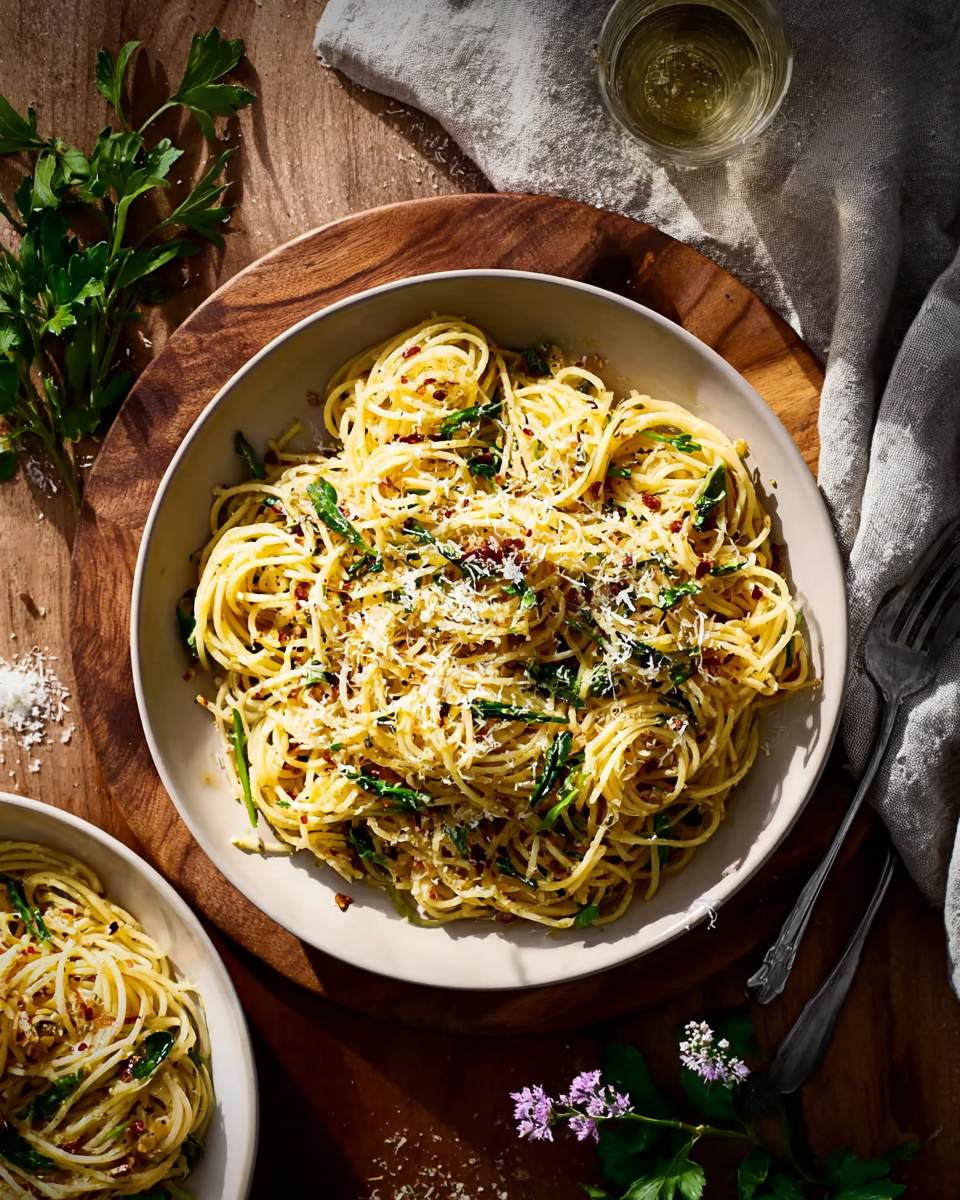
Spaghetti Aglio e Olio is the epitome of Italian culinary simplicity, transforming just a few everyday ingredients into something extraordinary. Thinly sliced garlic is gently sautéed in rich olive oil until golden and fragrant, releasing its deep aroma into the pan. A pinch of red pepper flakes adds a subtle heat, while al dente spaghetti absorbs every drop of the garlicky oil, creating a silky coating that clings to each strand. A sprinkle of fresh parsley brightens the dish, and a final touch of Parmesan cheese brings a delicate savory finish.
This recipe embodies the beauty of minimalist cooking — no heavy sauces, no complicated steps, just honest flavors that shine. It’s a dish you can prepare on a busy weeknight yet elegant enough to serve at a dinner gathering. Whether enjoyed on its own with a glass of wine or paired with a crisp salad and crusty bread, Spaghetti Aglio e Olio is a timeless favorite that celebrates the soul of Italian cuisine.
Full Recipe:
Ingredients:
-
1 pound spaghetti
-
6 cloves garlic, thinly sliced
-
1/2 cup extra-virgin olive oil
-
1/4 teaspoon red pepper flakes (or more to taste)
-
1/4 cup chopped fresh parsley
-
Salt to taste
-
Freshly grated Parmesan cheese (optional)
Directions:
-
Bring a large pot of salted water to a boil. Add the spaghetti and cook until al dente, following the package instructions. Reserve 1 cup of pasta water, then drain the rest.
-
Meanwhile, in a large skillet, heat the olive oil over medium heat. Add the sliced garlic and cook gently, stirring often, until golden and fragrant — do not let it burn.
-
Stir in the red pepper flakes and cook for 30 seconds.
-
Add the drained spaghetti directly into the skillet, tossing to coat evenly in the garlicky oil. Add a splash of the reserved pasta water to help create a silky sauce.
-
Stir in chopped parsley and season with salt to taste. Toss again until the pasta is well coated and glossy.
-
Serve immediately, topped with freshly grated Parmesan cheese if desired.
Prep Time: 10 minutes | Cooking Time: 15 minutes | Total Time: 25 minutes
Kcal: 410 kcal | Servings: 4 servings
The Timeless Charm of Spaghetti Aglio e Olio
In a culinary world filled with elaborate sauces and complex techniques, Spaghetti Aglio e Olio stands out as a dish that thrives on simplicity. Originating from the vibrant region of Naples, Italy, this pasta recipe relies on just a handful of ingredients — yet it delivers flavor, comfort, and authenticity that rival even the most sophisticated meals. At its heart, this dish is about the harmonious marriage of garlic, olive oil, and perfectly cooked spaghetti, brought to life with a touch of red pepper flakes and fresh parsley. It’s a recipe that celebrates the beauty of minimalism in cooking, allowing each element to shine.
A Glimpse into the History of Aglio e Olio
The origins of Spaghetti Aglio e Olio can be traced back centuries, deeply rooted in Italian peasant traditions. Historically, families with limited means created nourishing and flavorful meals using ingredients they had readily available in their pantries. Garlic, olive oil, and dried pasta were kitchen staples, and together, they formed the basis of this iconic dish.
In southern Italy, particularly in Naples, the dish became a staple for late-night suppers, often prepared after social gatherings or festive occasions. Italians would gather around the kitchen, sharing laughter and conversation while the fragrance of garlic sizzling in olive oil filled the air. Over time, this humble dish gained widespread popularity across Italy and eventually the world, becoming a beloved comfort food that transcends cultural and culinary boundaries.
Simplicity at Its Best: Why It Works
The brilliance of Spaghetti Aglio e Olio lies in its balance. While the ingredient list is short, each component plays a vital role:
-
Garlic infuses the oil with an aromatic depth that forms the backbone of the dish. When cooked gently, it releases a sweet nuttiness without bitterness.
-
Olive oil, preferably extra-virgin, coats the spaghetti, carrying flavors to every strand while adding a silky texture.
-
Red pepper flakes contribute a subtle heat that enhances, rather than overwhelms, the delicate garlic notes.
-
Parsley adds a fresh, herbaceous lift, balancing the richness of the oil.
-
Spaghetti, cooked al dente, provides the perfect canvas for these simple yet powerful flavors to cling to.
Together, these ingredients create a harmonious interplay of textures and aromas that make every bite satisfying.
Cultural Significance in Italian Cuisine
Spaghetti Aglio e Olio is more than just a meal — it’s a reflection of Italian values and lifestyle. Italians have long embraced the philosophy of “cucina povera,” which translates to “poor kitchen.” This culinary approach focuses on using humble, accessible ingredients to create dishes that are both flavorful and nourishing. Aglio e Olio embodies this philosophy perfectly.
In many Italian households, this dish is also associated with late-night dining. After a long day or social events, it’s common for families and friends to return home and prepare a quick bowl of this pasta. The preparation time is minimal, the ingredients are usually on hand, and the end result is a warm, comforting meal that brings people together around the table.
Moreover, this dish showcases the Italian respect for ingredients. Instead of masking flavors with heavy sauces, the goal is to highlight and elevate each element. This is why choosing high-quality olive oil, fresh garlic, and good pasta is key to achieving authenticity.
Flavor Profile: Elegant, Bold, and Balanced
While the recipe itself is simple, the flavor profile is anything but plain. The first thing that hits you is the aroma — the smell of garlic gently browning in olive oil is intoxicating. When you take a bite, the spaghetti delivers a silky, almost luxurious texture, thanks to the emulsified oil. The garlic provides both sweetness and a mild pungency, while the red pepper flakes awaken the palate with a gentle kick of heat. Fresh parsley brings brightness, cutting through the richness, and Parmesan (optional) adds a subtle umami layer.
Unlike cream-based or tomato-heavy sauces, Aglio e Olio is light yet deeply flavorful, making it an excellent choice year-round. It can be enjoyed on its own for a simple lunch or dressed up with sides for an elegant dinner.
Popular Variations of Aglio e Olio
Although the classic version remains unmatched, many cooks have put their own creative spin on Spaghetti Aglio e Olio without compromising its essence. Here are some popular variations:
1. With Anchovies
Adding anchovies to the sizzling garlic oil introduces a savory, umami-rich depth that elevates the dish. The anchovies dissolve into the oil, leaving no visible pieces but imparting incredible flavor.
2. With Lemon Zest
A sprinkle of lemon zest or a squeeze of juice adds brightness, making the dish even more refreshing — perfect for warmer months.
3. With Seafood
Some regions enhance Aglio e Olio with shrimp, clams, or calamari, creating a luxurious seafood pasta that still retains its simple charm.
4. With Toasted Breadcrumbs
Instead of Parmesan, toasted breadcrumbs can be sprinkled on top for a delightful crunch, offering a rustic texture contrast.
5. Spicy Variants
Adjusting the amount of red pepper flakes can give the dish more of a fiery personality, suiting those who enjoy bold, spicy flavors.
These variations show how versatile this dish is — it can adapt to different palates and occasions while maintaining its identity.
Pro Tips for Perfecting Spaghetti Aglio e Olio
Even a simple dish can be elevated with the right techniques. Here are some expert tips to make your Aglio e Olio truly exceptional:
-
Use high-quality ingredients. Since the recipe is minimalist, the quality of each element makes a noticeable difference. Choose good olive oil and fresh garlic.
-
Control the garlic carefully. Cook it slowly over medium or medium-low heat. Burning the garlic will give the dish a bitter taste.
-
Reserve pasta water. This starchy water helps create an emulsion with the oil, giving the pasta a glossy coating and preventing dryness.
-
Cook pasta al dente. Overcooked pasta can become mushy and won’t hold the sauce properly.
-
Serve immediately. The beauty of Aglio e Olio is in its freshness. It’s best enjoyed right after tossing, while the oil is silky and aromatic.
Pairing Suggestions
While this dish can stand alone beautifully, pairing it with the right sides or drinks can make the experience even more enjoyable:
-
-
Wine: A crisp white wine like Pinot Grigio or a light red like Chianti complements the garlicky flavors wonderfully.
-
Sides: A simple green salad with lemon vinaigrette or a plate of roasted vegetables pairs nicely.
-
Bread: A crusty loaf of Italian bread is perfect for mopping up any remaining oil and garlic at the bottom of the plate.
-
Why It’s Perfect for Any Occasion
Spaghetti Aglio e Olio is one of those rare dishes that fits any setting. It can be a quick weeknight dinner, a romantic date night meal, or even the star of a dinner party menu. Its elegance lies in its restraint — it doesn’t try to impress with flashiness but wins hearts with authenticity and flavor.
For home cooks, it’s also an ideal “pantry pasta” — a recipe that can be made anytime without special shopping trips. And for anyone learning to cook, this dish is a fantastic way to build confidence in the kitchen.
Conclusion
In a time when food trends often lean toward complexity and extravagance, Spaghetti Aglio e Olio remains a celebration of simplicity. It’s proof that you don’t need an extensive list of ingredients or complicated techniques to create something extraordinary. All you need is quality ingredients, attention to detail, and a love for honest flavors.
This classic Neapolitan dish continues to win over hearts across generations and cultures. Whether you’re cooking for one or sharing a meal with friends and family, a bowl of Spaghetti Aglio e Olio embodies the warmth, tradition, and soul of Italian cooking. It’s not just a recipe — it’s a culinary philosophy served on a plate.